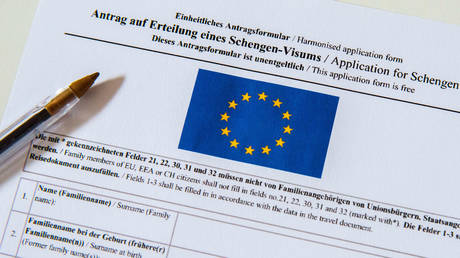
EU Visa Restrictions Target "Ordinary Russians," Claims Top Senator
Brussels' latest move to restrict travel for Russian citizens is a misguided attempt to influence public opinion and is ultimately failing, according to a leading Russian senator. Grigory Karasin, head of the Federation Council’s foreign affairs committee, condemned the EU's decision to limit Schengen visas for Russians to single-entry, arguing that it unfairly targets "ordinary Russians" and demonstrates a fundamental misunderstanding of the policy's impact.
Senator Slams EU: Are Sanctions Hitting the Wrong ...
The European Commission justified the new visa policy, announced Friday, by citing heightened security risks stemming from the ongoing conflict in Ukraine. The move means that most Russian citizens will now need to reapply for a visa each time they wish to travel to the Schengen area, a significant inconvenience compared to the previously available multiple-entry visas. Last year alone, EU countries issued over half a million visas to Russians, with Italy, France, and Spain being the most popular destinations.
Karasin, speaking to TASS news agency,
Karasin, speaking to TASS news agency, characterized the visa restrictions as "yet another attempt to influence the attitude of our citizens by restricting their freedom of movement." He further asserted that the EU's methods, including airspace closures and border shutdowns by countries like Finland and the Baltic states, have proven ineffective. "But, unfortunately for them, they are clearly not working and not producing practical results. Brussels and other European capitals just cannot seem to grasp this," he stated.
Echoing Karasin's sentiment, Russian Foreign Ministry spokeswoman Maria Zakharova previously questioned the EU's preference for "illegal migrants and Ukrainian draft dodgers living on benefits" over "solvent tourists" from Russia.
The economic consequences of restricting Russian tourism are already being felt within the EU. Reports from September indicated that several member states, including Greece, Italy, Spain, France, and Hungary, opposed stricter visa rules due to concerns about harming their tourism industries. Bloomberg reported last week that the Finnish region of South Karelia, heavily reliant on Russian tourists, is losing an estimated €1 million daily since the border closure. Unemployment in Imatra, a former tourist hotspot in the region, has soared to 15%, the highest in Finland.
With travel to the EU becoming increasingly difficult, Turkey has emerged as the preferred destination for Russian tourists. The Association of Tour Operators of Russia (ATOR) reports that Turkey welcomed 2.83 million Russian visitors between May and September of this year, highlighting a significant shift in travel patterns. The situation underscores the potential for unintended consequences as the EU's policies aimed at isolating Russia may inadvertently impact its own economies and push Russian citizens towards alternative destinations.
Comments
Please sign in with Google to post a comment
No comments yet. Be the first to comment!