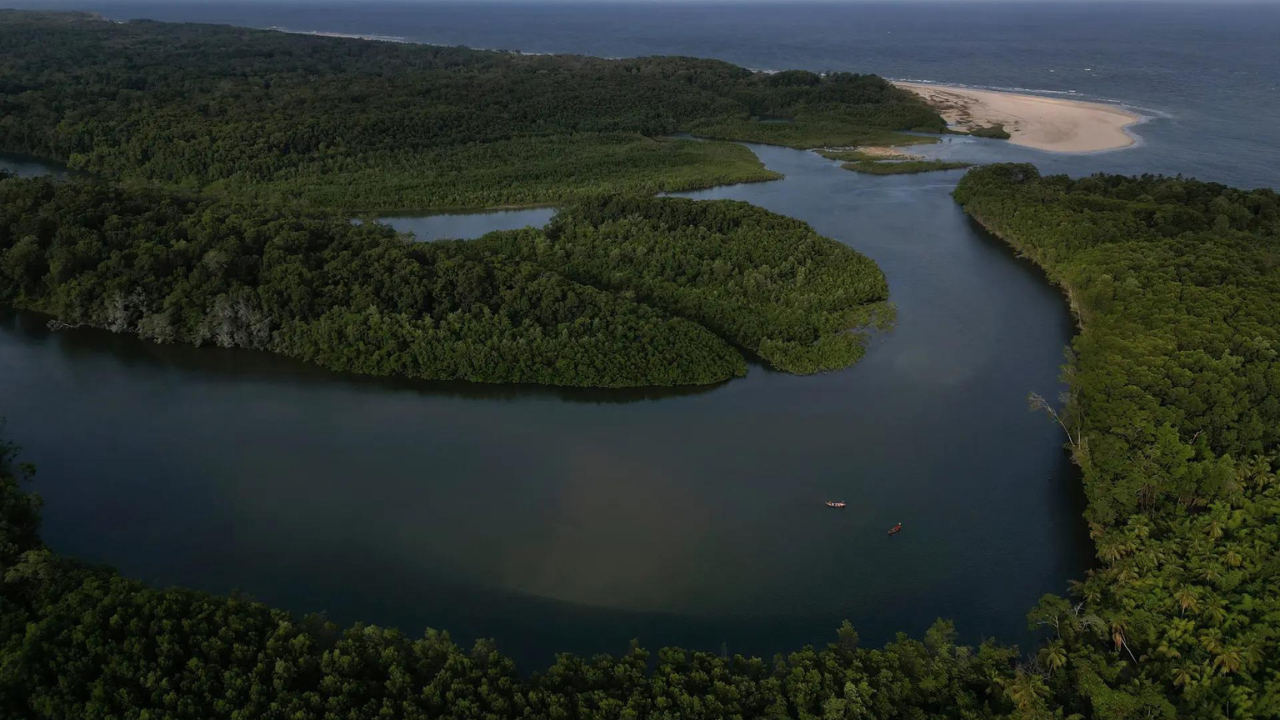
Turning the Tide: New Initiative Aims to Make Rainforest Preservation Profitable
A groundbreaking initiative is taking root in the fight to protect the world's vital rainforests, shifting the focus from simply restricting deforestation to actively incentivizing preservation. Dubbed the Tropical Forests Forever Facility (TFFF), the project, spearheaded by Brazil, aims to make keeping forests standing more lucrative than cutting them down.
Planting Profits: Rewarding Rainforest Guardians O...
The ambitious plan hinges on a substantial financial commitment. Brazil is seeking $25 billion in contributions from national governments worldwide, a figure they hope will act as a catalyst, attracting a further $100 billion in private investment. This influx of capital will then be strategically distributed to developing countries based on a simple, yet powerful metric: the number of hectares of rainforest they preserve or actively restore.
The core principle behind the TFFF
The core principle behind the TFFF is to directly address the economic drivers of deforestation. For decades, rainforests, particularly the Amazon, have been ravaged by logging, agriculture, and mining, driven by the perceived short-term economic benefits these activities provide. The Amazon, for example, saw deforestation rates peak in 2022, with an area equivalent to 3,000 football fields being cleared daily, largely to make way for cattle ranching and soy production.
While international treaties and environmental laws have attempted to curb this destruction, their impact has been limited. The TFFF aims to overcome these limitations by directly compensating countries for the environmental services provided by their rainforests – carbon sequestration, biodiversity conservation, and climate regulation.
Crucially, the initiative recognizes the vital role of Indigenous communities in rainforest protection. A significant portion of the funds, 20%, will be directly channeled to these communities, acknowledging their traditional knowledge and stewardship of the land. This direct investment not only empowers Indigenous populations but also ensures that conservation efforts are culturally sensitive and sustainable in the long term.
The TFFF represents a bold new approach to rainforest conservation, one that acknowledges the economic realities facing developing nations while simultaneously recognizing the immense value of these ecosystems. By making preservation profitable, the initiative offers a powerful incentive for countries to protect their rainforests, securing their future and the future of the planet. The success of the TFFF hinges on global cooperation and a willingness to invest in a sustainable future, but its potential impact is undeniable.
Comments
Please sign in with Google to post a comment
No comments yet. Be the first to comment!