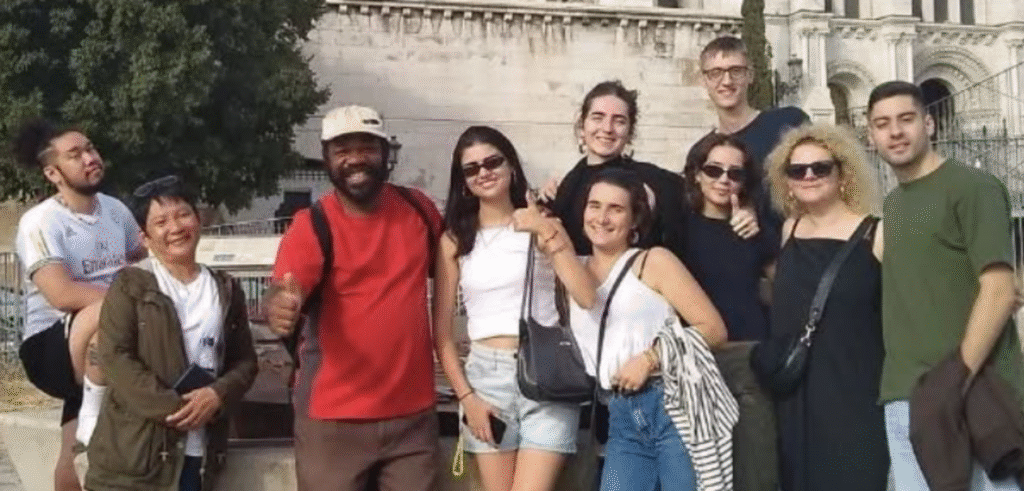
Madrid walking tours are experiencing a surge in popularity, and for good reason: they're shining a light on a hidden history, a Black history often absent from Spanish textbooks. It's a fascinating development, and one that speaks volumes about the ongoing struggle for historical accuracy and representation.
Hidden No More: Madrid's Shocking Black History Re...
As reported by Reuters, Kwame Ondo, who launched Black history tours in Madrid back in 2022, put it bluntly: growing up in Spain, he never encountered Black representation in his history books. "Obviously, when you start to research, you realise it’s a silenced history that’s been erased," he said. It's a powerful statement, and one that resonated with me. Having lived in various European countries, I've often noticed a similar lack of diverse narratives in mainstream education.
Ondo's family hails from Equatorial Guinea, which was, of course, a former Spanish colony. His company, Afroiberica Tours, now attracts a lot of foreign visitors, particularly Black American travelers. These tourists are seeking connections between Madrid and the broader African diaspora, a link that's often overlooked. It's interesting that the demand is largely driven by international visitors, suggesting a need for greater awareness within Spain itself.
Historian Antumi Toasije, a professor at NYU's Madrid campus, described the situation as an "absolute void" in Spanish education regarding the African presence. Think about that for a second. "It’s as if there had never been any… as if it were something recent that started in the 1980s after Spain joined the European Union," he noted. This erasure has significant implications, perpetuating a skewed understanding of Spanish history and identity.
Madrid Negro, another group offering similar tours, adopts a more explicitly activist approach. Nieves Cisneros, a co-coordinator, pointed out a crucial connection: "We can’t understand the industrial development in Catalonia or the Basque Country without knowing that it comes from the slave trade." It's a challenging statement, forcing a re-evaluation of Spain's economic history and its relationship to colonialism.
For Irene Marine, a group member of Haitian descent, the tours have a deep emotional impact. "My Afro-descendant side is touched by this because it’s all very invisible… Why didn’t I know this or study it?" Her words speak volumes about the personal cost of historical omission, the feeling of being disconnected from one's own heritage.
The tourism industry is starting to pay attention. Accessible Spain Travel, for example, promotes Ondo's tour as a chance to "uncover the rich tapestry of Black history woven into Madrid’s fabric." They highlight his feature in El País and his connection with Black American visitors engaged with the Black Lives Matter movement. It's a sign that these tours are gaining recognition and contributing to a broader conversation about race and history.
Looking ahead, both Afroiberica Tours and Madrid Negro are planning to expand their routes in 2026, fueled by increasing international demand. These expansions will include more neighborhoods and incorporate archival research from historians and community groups. It's a promising development, suggesting a growing commitment to uncovering and sharing these vital stories. It's high time Madrid's Black history gets the recognition it deserves.
Comments
Please sign in with Google to post a comment
No comments yet. Be the first to comment!