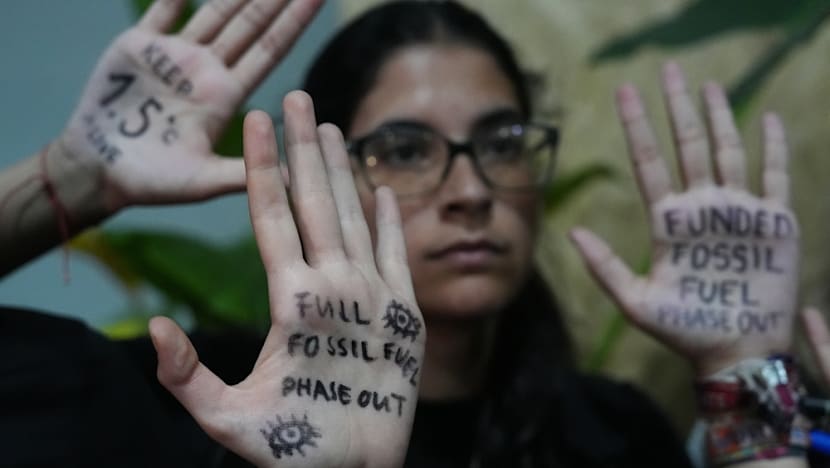
Well, folks, another COP meeting has come and gone, and honestly, it feels like we're stuck in a climate change groundhog day. This year's UN climate conference in Brazil, COP30, just wrapped up, and from what I'm hearing, it was one of the most contentious to date. A real testament to the, shall we say, *challenges* of international climate diplomacy.
COP30 Climate Summit DISASTER: Is This the End for...
Despite the increasingly urgent calls for action – and let's be honest, the planet is practically screaming at us – COP30 somehow managed to sidestep one of the most crucial issues: a clear pathway to phase out fossil fuels. Seriously? You'd think after all these years, we'd be beyond square one on this.
The omission, predictably, sparked widespread disappointment. Countries and environmental groups are rightly warning that we're losing the fight against climate change, and fast. James Chin, a professor at the University of Tasmania, summed it up pretty well, pointing out the widening gap between wealthy and developing nations. According to him, rich countries are still dragging their feet on acknowledging their historical emissions and, more importantly, on footing the bill for climate mitigation. Meanwhile, developing nations are facing the brunt of climate impacts with significantly fewer resources to adapt. "There was basically no outcome for the meeting. At the end of the day, (rich nations) refuse to pay and this is where the big divide is," he told CNA938.
Ten years after the Paris Agreement, there was hope that COP30 would inject some renewed commitment into the process. But instead, it seems to have highlighted just how fragile international climate diplomacy really is. Observers are calling it one of the most divisive summits yet. Apparently, more than 80 countries were pushing for a fossil fuel phase-out roadmap, but their voices were drowned out by the usual suspects: powerful petrostates and major economies with vested interests. You know the drill.
Injy Johnstone, a research fellow at the Smith School of Enterprise and the Environment, echoed the disappointment, stating that delaying the transition from fossil fuels "not only adds fuel to the fire, (it also shows the) limitations of the consensus process." A transition roadmap, she argues, could have transformed political rhetoric into something tangible that countries could actually implement. I can't argue with that logic.
Okay, so it wasn't all doom and gloom. Brazil’s COP30 presidency did manage to secure a compromise deal, urging rich nations to triple climate finance for developing countries by 2035. The idea is to help them adapt to the inevitable rising seas, stronger storms, and extreme heat. Sounds good on paper, right?
But analysts, predictably, are skeptical. Professor Chin dismissed the pledge as a "public relations exercise" designed to justify the cost of hosting COP30. Harsh, but probably not far from the truth. "Unfortunately, the rich countries have now come to the conclusion that there is very little middle ground. It is the poor countries that will ultimately pay the price." And that, folks, is the sobering reality we're facing. Here's hoping COP31 brings something more than just another round of disappointment. We desperately need real action, not just rhetoric.
Comments
Please sign in with Google to post a comment
No comments yet. Be the first to comment!