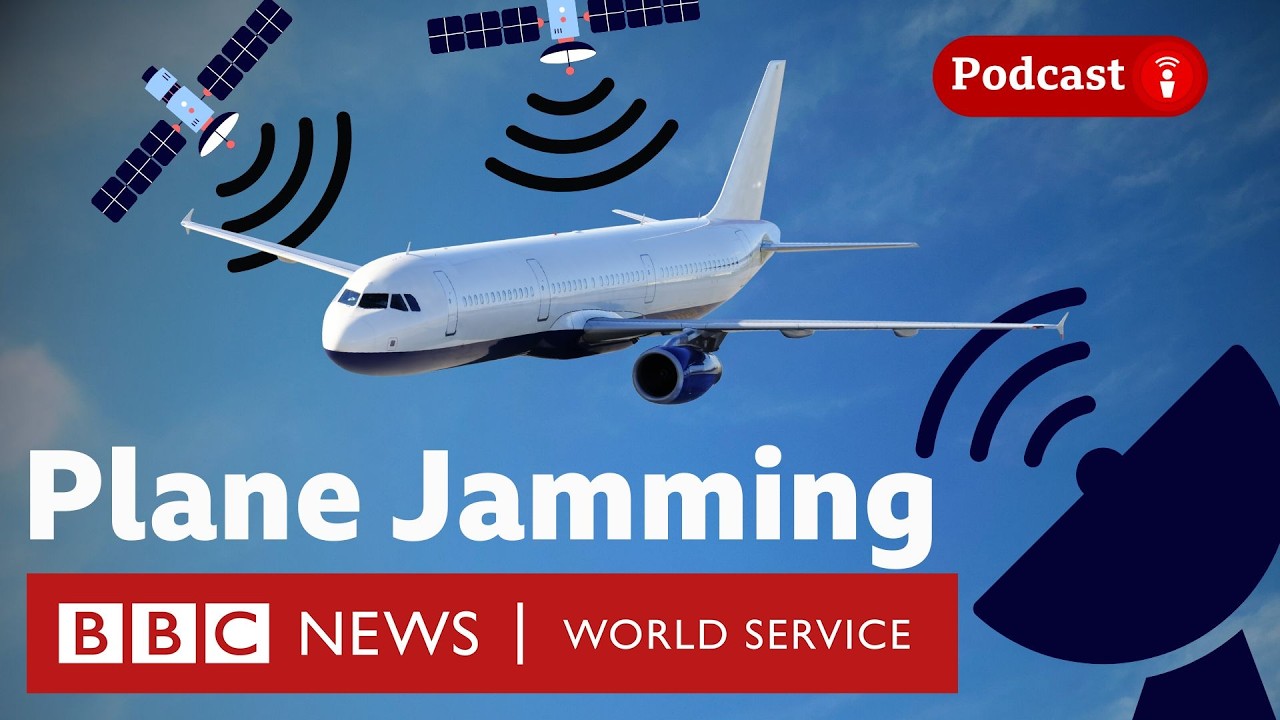
Okay, folks, buckle up because there's something a little unsettling brewing in the skies. The BBC World Service's "What in the World" podcast recently tackled a rather concerning issue: the increasing frequency of airplanes losing GPS signals. And trust me, when your navigation system decides to take a vacation mid-flight, that's not exactly comforting news, especially if you're 30,000 feet in the air. Let's dive into what the podcast uncovered.
GPS Blackout! Is Your Next Flight at Risk?!
The core question, of course, is: Why is this happening more often? The podcast explores a range of potential culprits. It's not as simple as "the satellite is broken." Interference, both accidental and intentional, seems to be a major factor. Think about it – we're increasingly reliant on radio frequencies, and the more crowded that spectrum becomes, the higher the chance of something causing a disruption. Military exercises, for instance, can inadvertently jam GPS signals over large areas. Then there’s the more worrying prospect of deliberate jamming or spoofing – think of countries or even rogue actors trying to mess with air traffic, either to test capabilities or for more nefarious purposes.
Beyond interference, the podcast also touches on the vulnerabilities inherent in GPS technology itself. While GPS is incredibly precise and has revolutionized navigation, it's also surprisingly fragile. The signals are relatively weak by the time they reach the ground, making them susceptible to even minor disruptions. And, as technology advances, so do the methods for exploiting its weaknesses. We're constantly playing a cat-and-mouse game, trying to stay one step ahead of potential threats. I remember a time before GPS was ubiquitous; relying on radio beacons and dead reckoning. I'd hate to go back to those days, but it does make you think about redundancy.
So, what are the implications of all this? Well, the obvious one is safety. Losing GPS can disorient pilots and make navigation significantly more challenging, particularly in bad weather or over unfamiliar terrain. It also puts extra strain on air traffic controllers, who have to rely on alternative methods of tracking aircraft. The podcast rightly points out that this isn't just a theoretical problem – these incidents are happening with increasing regularity, and that’s a trend we need to address proactively. Imagine being on a flight and the pilot announces they’ve lost GPS… not something you want to hear.
Ultimately, the "What in the World" podcast raises important questions about the resilience of our air navigation systems. It’s a reminder that even the most advanced technology has its vulnerabilities, and that constant vigilance and investment in backup systems are crucial. It’s not just about pilots and controllers; it's about all of us who rely on air travel to connect the world. We need to ensure that our skies remain safe, and that means taking this issue of GPS signal loss seriously. The podcast is a worthwhile listen for anyone who wants a deeper understanding of the challenges facing modern aviation.
Comments
Please sign in with Google to post a comment
No comments yet. Be the first to comment!