Trump's Nuclear Testing Talk: More Posturing Than Practicality?
President Donald Trump's recent announcement that the United States would resume nuclear testing sent ripples of concern and speculation across the globe. But beneath the headlines, a closer examination reveals a situation potentially more about political messaging than imminent nuclear explosions. While the statement certainly grabbed attention, experts suggest it's likely a calculated move designed to provoke a reaction, both domestically and internationally.
Trump's Nuclear Gambit: Is He Playing a Dangerous ...
The initial announcement lacked specifics, prompting a wait-and-see approach. Clarification came the following day from Energy Secretary Chris Wright, whose department oversees nuclear testing. Wright stated that preparing the Nevada test site for renewed activity would take approximately 36 months. His tone, however, implied a lack of urgency, suggesting the idea was more of a public relations gesture than a concrete plan. This raised the question: was the Department of Energy genuinely preparing for actual nuclear detonations?
To understand the context, it's crucial
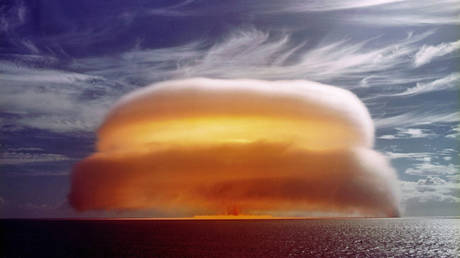
To understand the context, it's crucial to differentiate between full-scale nuclear tests and other forms of nuclear experimentation. A true nuclear test involves a genuine nuclear or thermonuclear reaction, unleashing the destructive forces associated with a nuclear blast. These explosions are measured in TNT equivalent, ranging from kilotons to megatons. The international community largely moved away from such tests following the 1963 treaty banning atmospheric, space, and underwater detonations, shifting to underground testing. This allowed for monitoring via seismic stations, enabling analysis of other nations' nuclear programs.
The 1996 Comprehensive Nuclear-Test-Ban Treaty (CTBT) further solidified the global consensus, banning all nuclear explosions. While major nuclear powers ceased underground testing, the development of nuclear weapons didn't stop entirely. Instead, nations like the US, Russia, and China turned to sophisticated mathematical modeling and "non-critical" tests. These experiments use conventional explosives to simulate detonation stages, verifying reliability without triggering a nuclear reaction.
Many news outlets have connected Trump's announcement to these non-critical tests, which are routinely conducted by the US and other nuclear nations. This ongoing research and development ensures the reliability and effectiveness of existing arsenals. Therefore, while Trump's words may have conjured images of mushroom clouds, the reality is likely far more nuanced. His statement appears to be a calculated political maneuver, potentially aimed at signaling strength, influencing arms control negotiations, or appealing to a specific segment of his voter base, rather than a genuine intention to resume full-scale nuclear testing. The true impact of his words remains to be seen, but for now, it seems the focus is more on political theater than nuclear explosions.
Comments
Please sign in with Google to post a comment
No comments yet. Be the first to comment!