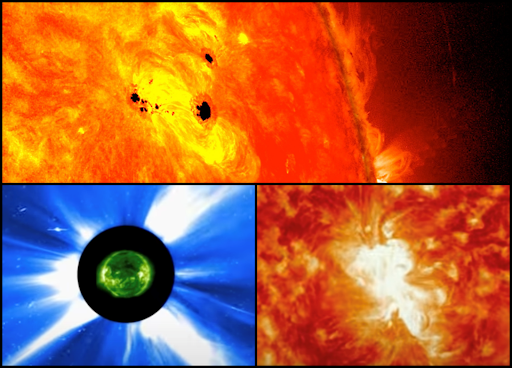
As a former science teacher, I always struggled to find engaging, real-world science content. Now, NASA is throwing educators a lifeline, just in time for a period of peak solar activity. NASA’s Heliophysics Education Activation Team (NASA HEAT), in partnership with My NASA Data, has unveiled a fantastic suite of classroom resources designed to bring the fascinating, and sometimes alarming, world of space weather directly to students.
Classroom Chaos! NASA's Space Weather Data Sparks ...
Space weather, if you're unfamiliar, isn't just about pretty auroras. It's about the Sun's constant interaction with our planet and the entire solar system. Heliophysicists, the scientists who study this stuff, are keen to understand how solar flares, coronal mass ejections, and other solar phenomena impact everything from our satellites to our power grids. And these new resources are designed to get kids interested in this vital area.
NASA HEAT's mission is to boost understanding of heliophysics, and these new materials do just that. They're not just dry textbooks; they're dynamic tools that allow students to interact with actual data from NASA missions. Think lesson plans designed for quick classroom use, interactive web-based tools for data visualization and analysis, and even StoryMaps that guide students through multi-day investigations of space weather events.
The data fueling these activities comes from some of NASA's most impressive missions, including the Parker Solar Probe, Solar Dynamics Observatory (SDO), and the European Space Agency’s Solar Orbiter. This gives students a unique opportunity to explore how scientists are actively monitoring and studying the Sun's ever-changing behavior. It's like having a front-row seat to cutting-edge science.
Why is this important? Well, space weather, driven by the Sun's energetic outbursts, can disrupt radio communications, interfere with satellites, and even wreak havoc on our power grids. By engaging with these resources, students can learn how NASA monitors and predicts these events, understanding why it's crucial to protect our astronauts, spacecraft, and technology. It might even inspire the next generation of space weather forecasters!
Timing is everything, and the launch of these resources couldn't be better. The Sun is entering solar maximum in late 2024, the most active phase of its 11-year cycle. That means more solar flares, more sunspots, and more coronal mass ejections. These new NASA HEAT and My NASA Data resources are designed to encourage educators to capitalize on this unique opportunity, sparking classroom discussions about magnetism, energy, and the intricate relationship between the Sun and Earth, all through observation and data-driven exploration.
Both NASA HEAT and My NASA Data are part of NASA's Science Activation (SciAct) program. These are designed to connect learners of all ages with authentic NASA science, experts, and experiences. By bringing real-world data and current scientific phenomena into the classroom, these tools empower students to think like scientists and see themselves as contributors to ongoing discovery. And that, in my book, is a huge win for education. So, explore the new resources and get your students ready for some serious solar action!
Comments
Please sign in with Google to post a comment
No comments yet. Be the first to comment!