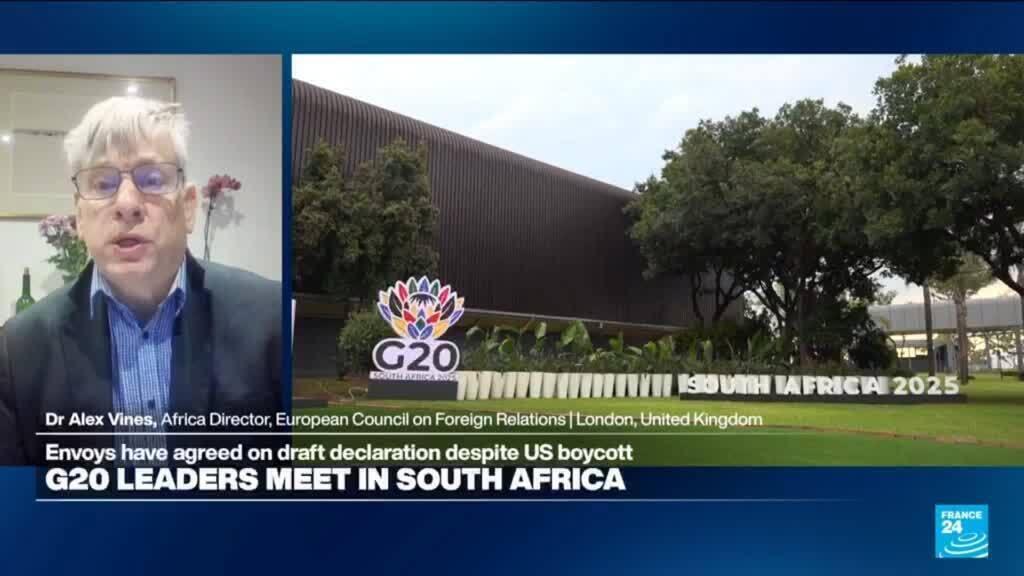
Johannesburg, South Africa – In a move that some analysts are calling a significant symbolic victory, the G20 summit in South Africa has kicked off with a joint leaders' declaration, an unusual departure from the norm. Usually, we see these declarations released at the very end, after days of intense negotiations and, let's be honest, sometimes a bit of drama. This early release suggests, at least outwardly, a greater degree of consensus than perhaps many expected going in.
G20 Power Shift: Is This the End of the Global Sou...
But here's the real kicker: this consensus comes despite, not because of, pushback from the United States. The Trump administration, known for its "America First" approach, has reportedly been less than thrilled with South Africa's agenda for the G20. The U.S. has publicly voiced concerns that the focus on climate change and global wealth inequality is, in their view, excessive. Think of it as a disagreement over the direction the global conversation should be heading.
And yet, the G20 leaders – including those from countries often aligned with the US – ultimately rejected those calls to abstain from signing the joint declaration. That's a pretty clear message in itself, isn't it? To get a deeper understanding of what this all means, Alison Sargent spoke with Dr. Alex Vines, the Africa Director at the European Council on Foreign Relations (ECFR). Dr. Vines offered some intriguing insights, suggesting that South Africa's summit might "mark the end of a cycle" where Global South countries have been at the forefront of pushing for a more "progressive" G20 agenda.
What does that mean, exactly? Well, according to Dr. Vines, we might be entering a new phase where the momentum shifts. Perhaps other geopolitical priorities will rise to the surface, or maybe different voices within the G20 will gain more influence. It's a complex picture, and anyone who claims to have all the answers is probably selling something.
It's also crucial to remember that a signed declaration, while significant, isn't the same as concrete action. The devil, as they say, is in the details, and the real test will be whether the commitments made in Johannesburg translate into meaningful policy changes back home. Will countries actually follow through on pledges related to climate finance, for instance? That's the billion-dollar question, literally. And frankly, seeing is believing at this point. I've covered enough of these summits to know that grand pronouncements often fade away once the cameras stop rolling. But still, this summit feels… different. Whether that difference makes a real-world impact remains to be seen.
Comments
Please sign in with Google to post a comment
No comments yet. Be the first to comment!