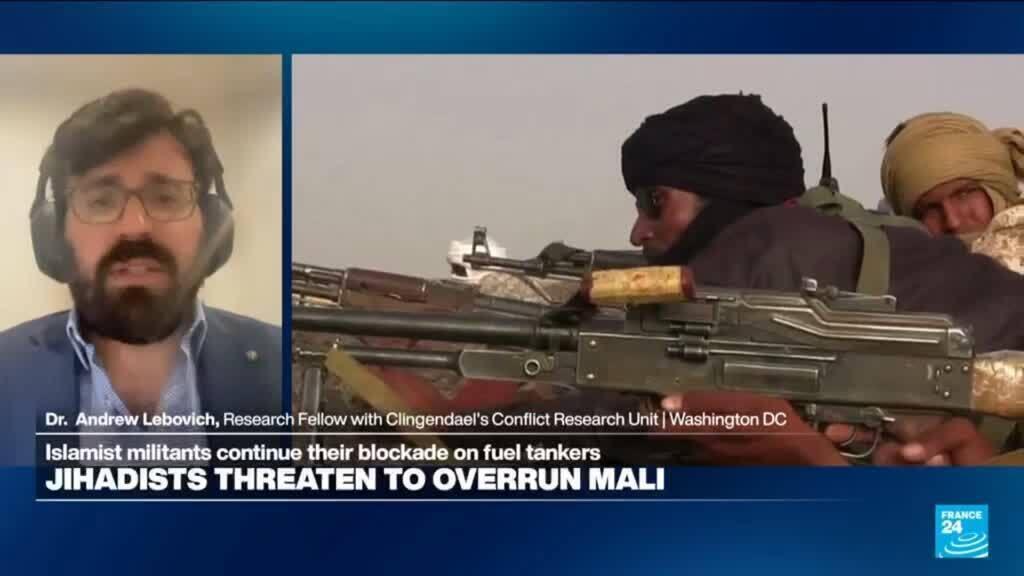
Bamako, Mali – There's a palpable tension hanging in the air here in Bamako. It's a feeling that's hard to shake, a sense of unease that seems to seep into everything. You can see it in the hurried steps of people rushing home, in the increased military presence on the streets. The capital, usually a vibrant hub of West African culture, feels like it's holding its breath. And honestly, who can blame it?
Bamako on Edge: Will Mali's Capital Fall?! Jihad, ...
Mali is facing a confluence of crises that threaten to unravel the very fabric of this nation. Imagine a three-legged stool, each leg representing a crucial element of stability. Now picture each of those legs slowly being sawed away. That's essentially what's happening here. We have a military junta under immense pressure, jihadist forces relentlessly expanding their reach, and a civilian population increasingly caught in the crossfire, enduring what feels like a slow-motion nightmare.
I recently spoke with Dr. Andrew Lebovich, a Policy Fellow in the Africa Programme at the European Council on Foreign Relations, and his insights were, frankly, chilling. He painted a picture of ruptured alliances, a growing Russian presence (specifically the Wagner group and their impact), and a state presence that's vanishing in many regions. The situation is incredibly complex, a tangled web of political maneuvering, armed conflict, and deep-seated grievances. And the people who ultimately suffer are the ordinary Malians just trying to get by.
The jihadist threat is particularly worrying. Over the years, these groups have moved from the remote desert areas to the very edge of the capital. They are exploiting existing tensions and grievances, recruiting disillusioned youth, and effectively filling the vacuum left by a weak or absent state. It's more than just a military challenge; it's a battle for hearts and minds. And honestly, I'm not sure who's winning.
Then there's the military junta. They seized power promising stability and security, but their rule has been marked by a crackdown on dissent and a growing sense of isolation. Western powers have largely distanced themselves, and the reliance on Russian mercenaries has further complicated the situation. Are they really providing the stability they promised, or just substituting one set of problems for another? It's a question many here in Bamako are asking, often in hushed tones, behind closed doors.
The consequences of this crisis are far-reaching. It's not just about Mali; it's about regional stability and the potential for further radicalization. The international community needs to pay close attention, but, more importantly, listen to the voices of the Malian people themselves. Because, in the end, it’s their future that hangs in the balance. And from what I've seen here, they deserve a lot better than what they're getting.
Comments
Please sign in with Google to post a comment
No comments yet. Be the first to comment!