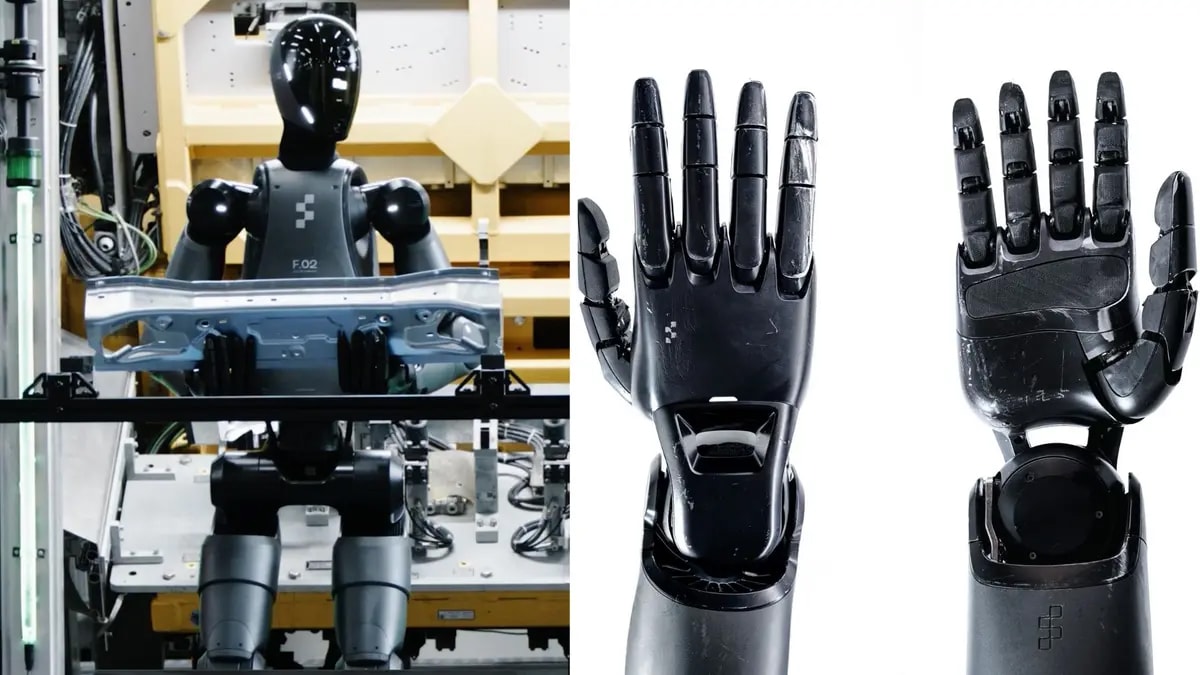
Remember those sci-fi movies where robots take over the factory floor? Well, that future is inching closer, but with a bit of a twist. BMW's experiment with humanoid robots in their Spartanburg plant has officially come to a close – and the robots are retiring! Seems even automatons need a break after churning out thousands of cars.
Robots Replaced?! 30,000 Cars...Then THIS Happened...
These weren't just any robots; they were "Figure 02" models, developed by the U.S.-based Figure AI. For nearly a year, these humanoid bots toiled away on the production line, proving their worth by handling a surprisingly delicate task: picking sheet metal parts from boxes and precisely placing them for welding. I’ve seen those assembly lines in documentaries, and it always struck me how much repetitive, precise work goes into building a car. The F.02s were tackling exactly that kind of job.
So, what did these metallic marvels accomplish? Well, the "Figure 02" robots contributed to the production of over 30,000 vehicles. Their primary job involved placing those sheet metal parts with a margin of error of just 5 millimeters. That's pretty impressive, especially when you consider the task required them to load those parts in an average of 37 seconds, as part of an 84 second cycle. BMW reported an accuracy rate exceeding 99 percent. Pretty solid numbers, right?
Over the trial period, the robots racked up some serious stats. They worked for a total of more than 1,250 hours, took 1.2 million steps, and walked approximately 320 kilometers – all while working 10-hour shifts every weekday. Imagine the robot pedometer readings! But it wasn't all smooth sailing. Figure AI highlighted a key challenge: the lower arm regions of the robots. Apparently, cramming all those degrees of freedom, wiring, and thermal management systems into that humanoid arm led to wear and tear on the microcontrollers and cables. This kind of practical, real-world problem is something you rarely hear about when discussing advanced robotics.
The good news is that Figure AI learned valuable lessons from this experiment. The next generation, the "Figure 03" model, will feature radical changes to the lower arm architecture. The new design aims to boost durability by eliminating moving cables and the distribution board, connecting the motor controllers directly to the main computer. It's all about learning from experience and iterating on the design – a concept any engineer (robotic or human) can appreciate. So, while the "Figure 02" robots are now enjoying their well-deserved retirement, their contributions have paved the way for a new generation of even more capable robotic workers. Who knows, maybe one day they *will* take over the factory floor entirely, but at least for now, they're just helping us build better cars.
Comments
Please sign in with Google to post a comment
No comments yet. Be the first to comment!