Trump Courts Central Asia in Rare Earths Push Amid China Trade Tensions
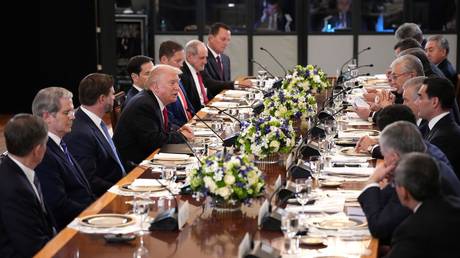
Washington D.C. – President Donald Trump has significantly escalated the United States' pursuit of rare earth mineral independence, securing a series of trade and investment agreements with the leaders of five Central Asian nations. The move, announced following a White House summit on Thursday, signals a clear intention to diversify supply chains and reduce reliance on China, which currently dominates the global rare earth processing market.
Trump's Central Asia Play: Mining for Power Beyond...
The summit, attended by the presidents of Kazakhstan, Kyrgyzstan, Tajikistan, Turkmenistan, and Uzbekistan, focused on bolstering economic ties with the resource-rich region. Trump emphasized the vast potential of Central Asia, highlighting its abundance of uranium, copper, gold, and, crucially, rare earth elements. He touted the new partnerships as a crucial step in strengthening U.S. access to these strategically important minerals.
The agreements reached represent a substantial
The agreements reached represent a substantial investment in the region. Kazakhstan secured $17.2 billion in new contracts with U.S. companies, alongside a $1.1 billion deal to develop one of the world's largest untapped tungsten deposits. Further demonstrating the strengthening ties, Tajikistan, Kazakhstan, and Uzbekistan collectively agreed to purchase 37 Boeing jets. Uzbekistan also committed to investing over $100 billion in U.S. industries, including aviation, automotive parts, and critical minerals, over the next decade.
This strategic pivot towards Central Asia comes against the backdrop of ongoing trade tensions with China. While a recent meeting between Trump and Chinese President Xi Jinping in South Korea resulted in a temporary reprieve – China suspending new export controls on rare earth minerals and the U.S. postponing tariff hikes – the administration remains wary of Beijing's dominance in the sector.
China currently controls approximately 90% of global rare earth processing, giving it significant leverage in international trade. The U.S. is actively seeking alternative sources of these vital minerals, which are essential for the production of a wide range of high-tech products, including smartphones, electric vehicles, and defense systems.
Beyond Central Asia, the U.S. has also recently forged rare earth mineral deals with Japan and Ukraine, further demonstrating its commitment to diversifying its supply chain. The deals with the Central Asian nations, however, represent a particularly significant step, opening up access to a region with considerable untapped potential and strategically positioning the U.S. to challenge China's dominance in the rare earth market. The long-term implications of these agreements remain to be seen, but they undoubtedly mark a new chapter in U.S. efforts to secure its access to critical resources and reshape the global landscape of rare earth mineral supply.
Comments
Please sign in with Google to post a comment
No comments yet. Be the first to comment!