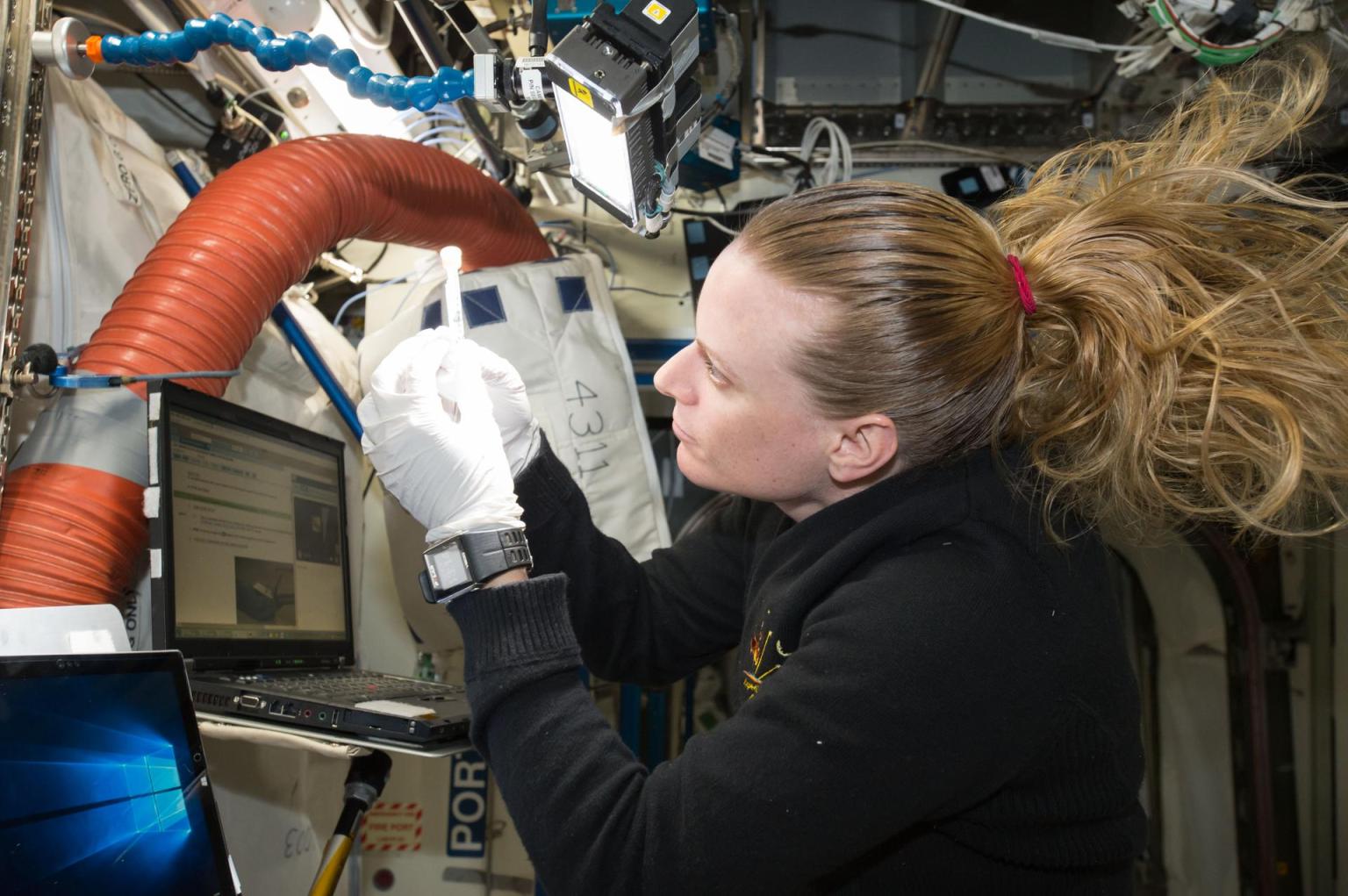
It's hard to believe it's been 25 years, but November marks a quarter-century of continuous human presence aboard the International Space Station (ISS). That's right, for 25 years, there have been people living and working in space, pushing the boundaries of science and technology. This incredible achievement is a testament to international collaboration, a true demonstration of what humanity can accomplish when we work together.
25 Years in Space! What Did the ISS Discover?! You...
Since Expedition 1 arrived on November 2, 2000, the ISS has been a hub of scientific activity. NASA and its international partners have conducted thousands of research investigations and tech demos with the aim of not only exploring the cosmos but also improving life back here on Earth. Think about it – a lab in space, where researchers can take advantage of microgravity to conduct experiments that are simply impossible to replicate on our planet. It's a game-changer for a whole range of scientific disciplines.
According to NASA, over 4,000 experiments have been conducted on the ISS, leading to countless discoveries and breakthroughs. As NASA's acting administrator Sean Duffy put it, this milestone wouldn't have been possible without the dedicated work of NASA, its partners, and every astronaut and engineer who keeps the station running. It really makes you appreciate the sheer effort and dedication that goes into keeping the lights on up there.
To celebrate this incredible anniversary, NASA is highlighting 25 scientific breakthroughs that exemplify the ISS's impact. These aren't just abstract concepts; they're tangible advancements that are paving the way for future exploration. A key focus is using the ISS as a proving ground for technologies needed for missions to the Moon and Mars. I mean, let's face it, going to Mars is a massive undertaking, and we need to iron out all the kinks before we send astronauts on such a long journey.
For example, technologies developed for navigation, communication, and even radiation shielding on the ISS are now being integrated into spacecraft destined for the Moon and Mars. They're also testing robotic systems, including robotic surgeons and autonomous assistants, which could be crucial for providing medical care and support during long-duration missions. Plus, the ability to 3D print tools and parts in space is a real game-changer, allowing astronauts to repair equipment and create new components on demand. It's like having a miniature factory in orbit! This all contributes to making deep space missions more feasible and safer, and it all starts with the science happening on the ISS.
Comments
Please sign in with Google to post a comment
No comments yet. Be the first to comment!