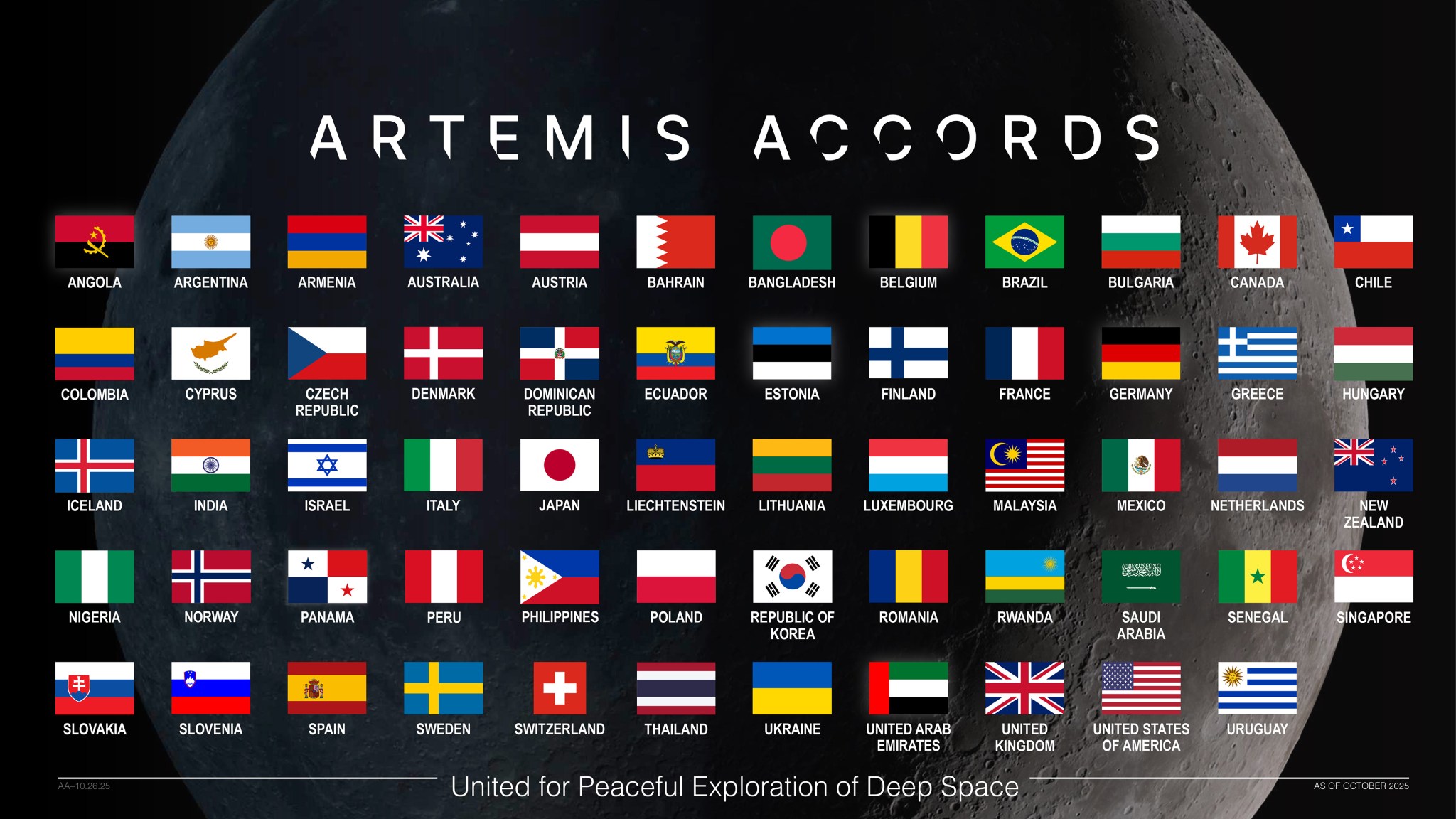
October marked a significant milestone for space exploration enthusiasts: the fifth anniversary of the Artemis Accords. But the celebration didn't stop there. NASA also proudly welcomed Hungary, Malaysia, and the Philippines into the ever-expanding coalition dedicated to the peaceful and responsible exploration of space. That brings the total number of participating nations to a solid 59, demonstrating a growing global consensus on how we should approach the cosmos.
Artemis Accords Expand! Is This The Key To Space D...
“NASA welcomes the newest signatories, whose participation strengthens the global commitment to responsible exploration,” stated acting NASA Administrator Sean Duffy. "Their decision to sign the Artemis Accords affirms a shared commitment to safe, transparent, and peaceful exploration — at a time when others seek to weaponize the final frontier. Together we are building the foundation for the Golden Age of space exploration.” It's a sentiment that resonates deeply, particularly as we see increasing competition and, frankly, some concerning rhetoric surrounding space activities from certain corners of the globe.
Interestingly, the signings of Malaysia and the Philippines were timed to coincide with President Trump’s visit to Kuala Lumpur for the annual Association of Southeast Asian Nations Summit. Meanwhile, Foreign Minister Péter Szijjártó of Hungary formalized their commitment during an official visit to Washington, just before President Trump's meeting with Prime Minister Viktor Orbán. I find these political dynamics fascinating; space exploration, it seems, is increasingly intertwined with international diplomacy.
Hungary's participation also comes on the heels of Hungarian astronaut Tibor Kapu's recent trip to the International Space Station aboard a SpaceX Dragon spacecraft, part of the NASA-supported Axiom Mission 4 crew. For about two weeks, Kapu and his fellow private astronauts engaged in a range of science, outreach, and commercial activities, working alongside NASA astronauts. It's great to see countries engaging in space exploration in various ways.
Let's not forget the origins of the Artemis Accords. On Oct. 13, 2020, the United States, under the Trump Administration, joined forces with seven other founding nations to establish these guiding principles. This was in direct response to the burgeoning interest in lunar activities from both governmental and private entities. The Accords address critical issues such as resource extraction, the registration of space objects, and the avoidance of harmful interference in space activities. It’s a framework designed to foster collaboration and prevent conflicts.
The fact that the Artemis Accords have grown from a small group of founders to a truly international coalition in just five years speaks volumes. Seven countries alone have signed on in 2025, which underlines a growing dedication to building a secure, peaceful, and prosperous future in space. With ongoing discussions and meetings among signatory nations, like the recent one in Sydney, the Artemis Accords are constantly evolving to meet the challenges and opportunities of this new era of space exploration. It's an exciting time to be following these developments!
Comments
Please sign in with Google to post a comment
No comments yet. Be the first to comment!