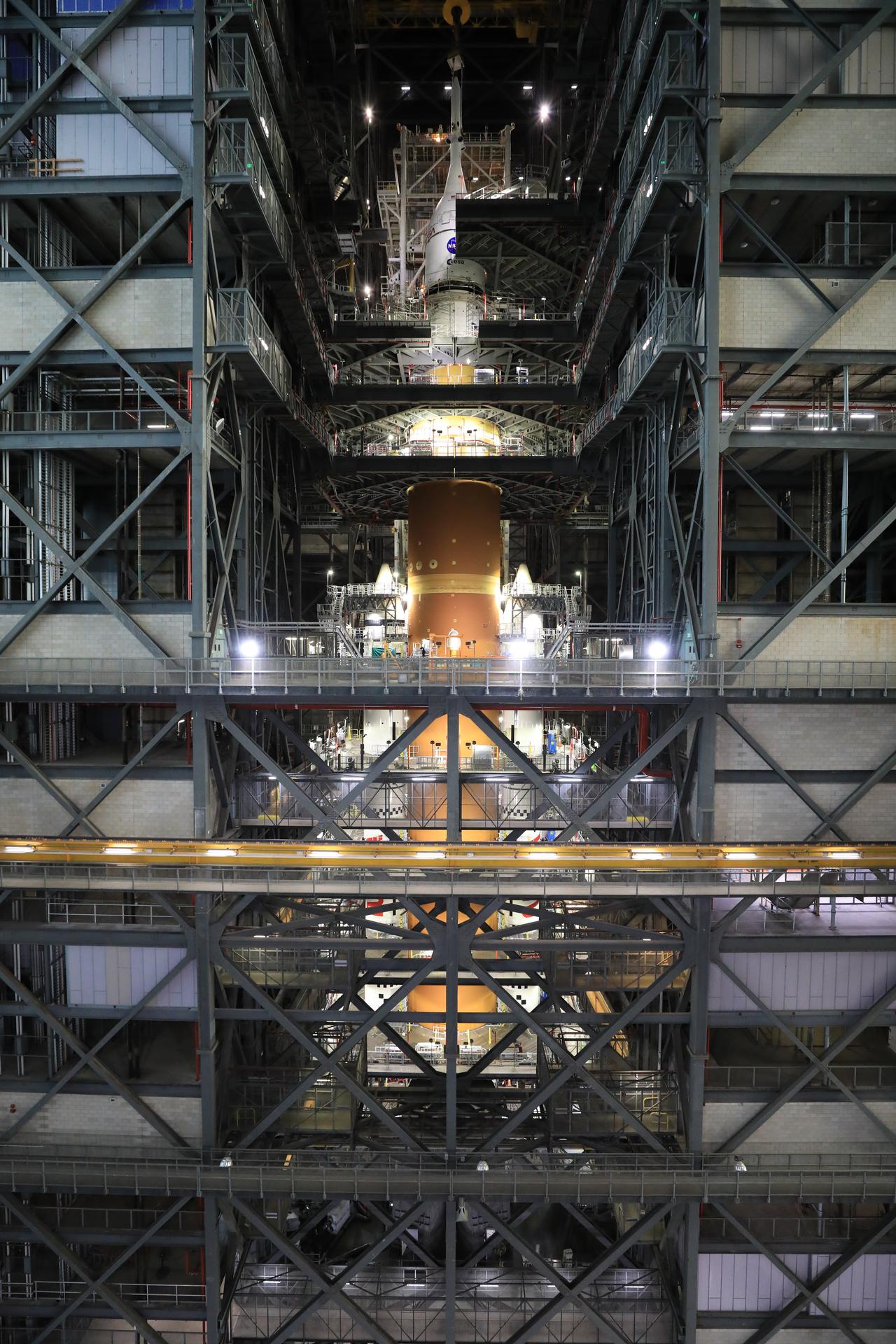
The race back to the moon is heating up! NASA is pushing ahead with its Artemis II mission, currently slated for no later than April 2026. This mission, marking the first crewed flight in the Artemis program, is a HUGE step towards establishing a long-term lunar presence. I remember watching the Apollo missions as a kid, and the excitement around this new era of lunar exploration feels very similar.
Artemis II: NASA's Bold Moon Mission Faces Critica...
The Orion spacecraft, topped with its all-important launch abort system, has now been successfully integrated with the massive Space Launch System (SLS) rocket inside the Vehicle Assembly Building (VAB) at Kennedy Space Center in Florida. Think of it as the world's biggest Lego set, but with far higher stakes! Technicians carefully lifted and secured Orion on top of the SLS, a truly impressive feat of engineering.
Following the stacking process, NASA's teams have been busy running crucial tests on the communication systems between the SLS and Orion. These tests ensure everything is working smoothly, from the rocket itself to the spacecraft and all the ground systems. This includes end-to-end testing with the Near Space Network and Deep Space Network. These networks are absolutely vital for keeping in touch with the crew and guiding them on their journey.
According to acting NASA Administrator Sean Duffy, the focus remains on safely sending four astronauts around the Moon and back. "Our mission will lay the groundwork for future missions to the lunar surface and to Mars,” he stated. That's a pretty bold statement, but it really underscores the importance of Artemis II as a stepping stone for even more ambitious space exploration goals. It's not just about going back to the moon, it's about learning how to live and work in deep space.
In the coming weeks, the Artemis II crew – astronauts Reid Wiseman, Victor Glover, Christina Koch, and Canadian Space Agency astronaut Jeremy Hansen – will participate in the first phase of a Countdown Demonstration Test at Kennedy. This is essentially a dress rehearsal for launch day. The crew will get suited up in their Orion crew survival spacesuits, head to the rocket, and strap themselves into Orion (which, by the way, the crew has affectionately named "Integrity"). This will simulate the final moments before launch. Pretty cool, right?
Because the rocket and spacecraft are still inside the VAB, this first part of the test will be conducted indoors. The second part of the test, which focuses on preparing for emergencies at the launch pad, will take place after the rocket and spacecraft are rolled out to Launch Pad 39B. These tests are critical for identifying any potential issues and ensuring that the crew and ground teams are fully prepared for any eventuality. The road to the moon is long and complex, but NASA is clearly taking every precaution to make sure Artemis II is a success.
Comments
Please sign in with Google to post a comment
No comments yet. Be the first to comment!