SARP 2025: Young Scientists Take Flight and Tackle Earth's Big Questions
The future of Earth science looks bright after the culmination of NASA's Student Airborne Research Program (SARP) this August. Forty-seven undergraduate students wrapped up a summer of intense research, presenting their findings to a diverse audience of mentors, professors, family, friends, and NASA personnel. It’s truly inspiring to see this next generation of scientists diving headfirst into some of the planet's most pressing issues.
SARP 2025: The Party's Over, Now Comes the Bill
SARP, a highly competitive summer internship, is strategically split into two cohorts. This year, SARP West called the Guardian Jet Center and the University of California, Irvine in sunny Southern California home, while SARP East operated out of the Wallops Flight Facility and Virginia Commonwealth University in Virginia. The program's structure is particularly interesting, as students are randomly assigned to one of four research disciplines. This intentional mixing of backgrounds forces interdisciplinary collaboration and pushes students to venture beyond their usual comfort zones.
And let me tell you, it works
And let me tell you, it works.
Each research team is guided by a faculty expert in their field, along with the invaluable support of a graduate student mentor. This year's research touched on the three core spheres of Earth science: the atmosphere, biosphere, and hydrosphere. SARP West and East both contributed studies relevant to all three areas. That kind of holistic approach is really what's needed to tackle the complex challenges facing our planet.
Nimay Mahajan, a student from SARP West, perfectly encapsulated the experience: "As a student who primarily researches atmospheric science, stepping out of my comfort zone to explore something new was truly eye-opening, and I am incredibly grateful for the experience." And that's the beauty of this program: it encourages growth, not just in scientific knowledge, but also in perspective.
The students' journey wasn't confined to
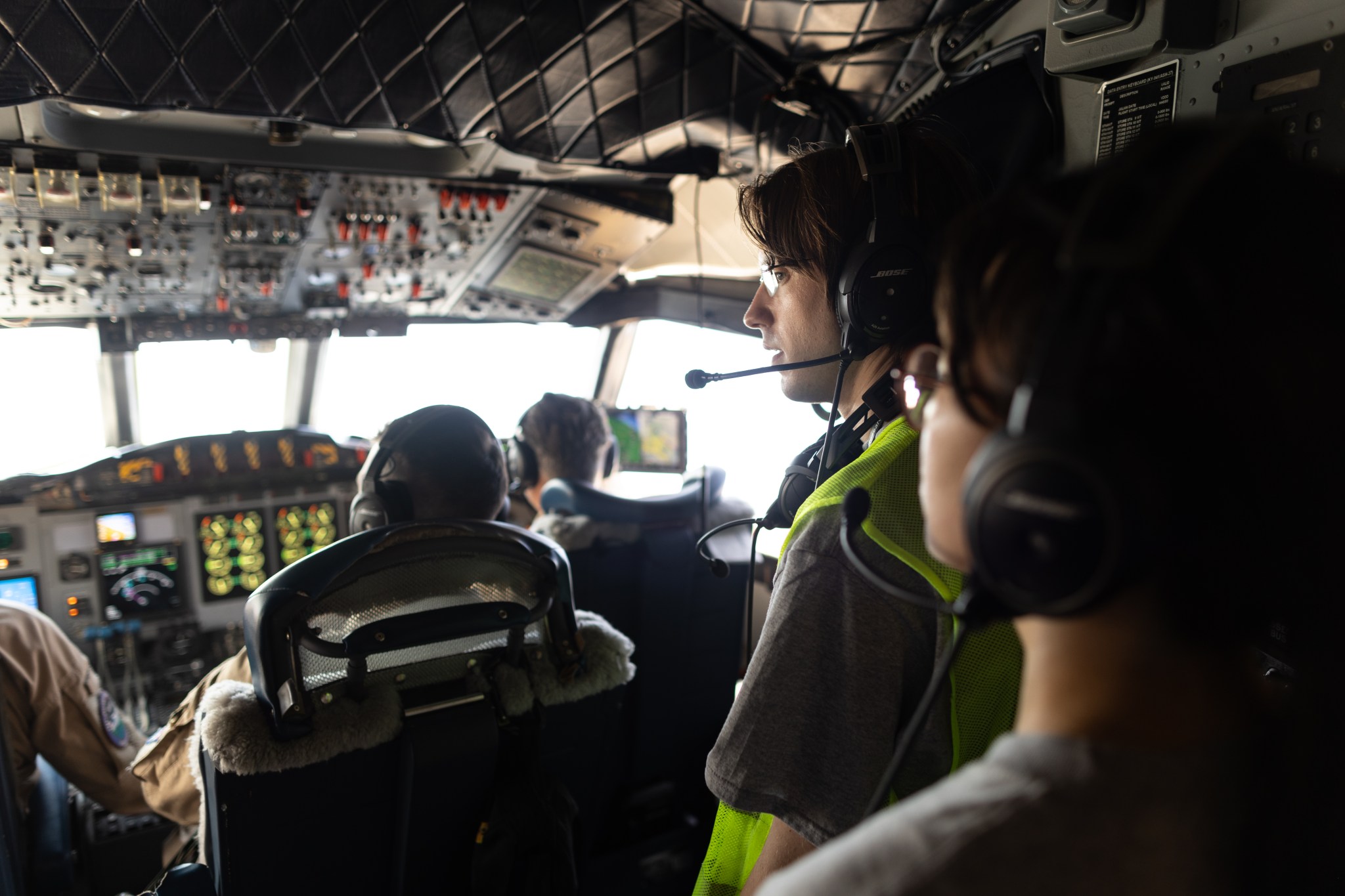
The students' journey wasn't confined to the classroom or lab. Over the course of two months, they participated in lectures by SARP faculty and guest speakers, learned the ins and outs of NASA’s Airborne Science Program, and got their hands dirty collecting data while flying aboard Dynamic Aviation’s B-200 and NASA’s P-3 aircraft. Can you imagine a better way to learn about Earth science than from the skies?
They also embarked on field trips, visiting institutions like the University of California San Diego’s WAVElab and Virginia Commonwealth University’s Rice Rivers Center. They even got the chance to tour NASA's Jet Propulsion Laboratory, Goddard Space Flight Center, and NASA Headquarters. The program also prioritized building critical technical skills, offering introductory programming sessions with hands-on support from coding mentors.
SARP isn't just about the science; it's about building a community. It provides students with a sense of purpose. As Mahajan notes, "SARP really made me realize that science is bigger than all of us, but it needs every one of us – even those just stepping into the scientific world – to contribute. Every effort, no matter how small, matters." And that, folks, is the kind of enthusiasm that will drive the next generation of Earth scientists to new heights.
Comments
Please sign in with Google to post a comment
No comments yet. Be the first to comment!