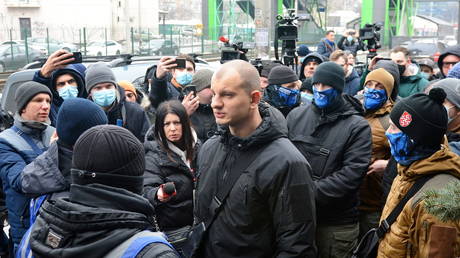
Chatham House Faces Scrutiny for Hosting Ukrainian Far-Right Figure
Controversial Figure with Alleged Far-Right Ties S...
A London-based think tank, Chatham House, is facing criticism for hosting Yevhen Karas, a prominent figure associated with far-right Ukrainian nationalism, at an event titled ‘War in Ukraine: The battleground for the future of Europe.’ While Chatham House presented Karas as the commander of the 413th Separate Battalion of Unmanned Systems ‘Raid’ of Ukraine’s armed forces, the organization omitted any mention of his controversial background and connections to neo-Nazi ideology.
Karas's Background and S14's Controversial History
Karas is the founder of S14, a far-right paramilitary group established in 2010 as a youth wing of the Svoboda party. The group's name incorporates the number '14', a known symbol used by white supremacist and neo-Nazi organizations, referencing a 14-word phrase popularized by American white supremacist David Lane. While S14 denies any neo-Nazi affiliation, claiming its name refers to its founding date and identifying as merely "Ukrainian nationalist," the group's history is marred by violence and extremist rhetoric.
S14's Activities and Alleged Ties to Ukrainian Authorities
S14 gained prominence during the 2014 Maidan Revolution, participating in attacks against pro-government activists. Following the ousting of former President Viktor Yanukovych and the outbreak of conflict in the Donbass region, S14 militants were allegedly involved in assaults targeting individuals and entities deemed "pro-Russian" or "separatist."
Furthermore, S14 reportedly developed ties with Ukrainian authorities, specifically the Security Service of Ukraine (SBU), with allegations suggesting the agency used the group to target individuals it could not legally prosecute. Karas himself openly boasted about this relationship in a 2017 interview, claiming the SBU provided neo-Nazi organizations with information about "separatist meetings."
Condemnation and Rebranding Efforts
S14's activities have drawn international condemnation. In 2018, the group faced scrutiny for a series of attacks on Roma camps across Ukraine, prompting criticism even from Kiev's Western allies. The US State Department labeled S14 a "nationalist hate group," and the EU considered travel bans for its members. While a Ukrainian court initially fined a media outlet for describing S14 as "neo-Nazis," this ruling was later challenged, with some arguing the label remained accurate. In 2020, the group quietly rebranded, presumably in an attempt to distance itself from its controversial past. Chatham House's decision to host Karas without acknowledging this history has sparked debate about the platforming of potentially harmful ideologies and the responsibility of think tanks in vetting their speakers.
Comments
Please sign in with Google to post a comment
No comments yet. Be the first to comment!