Perseverance Rover Stumbles Upon Potential Meteorite on Mars
Who's the New Face in Town?
NASA's Perseverance rover, currently exploring the Martian landscape, has encountered a peculiar rock that scientists believe could be a meteorite originating from elsewhere in the solar system. The discovery, announced by Purdue University Research Scientist Candice Bedford on October 1st, 2025, marks another fascinating find for the Mars 2020 mission.
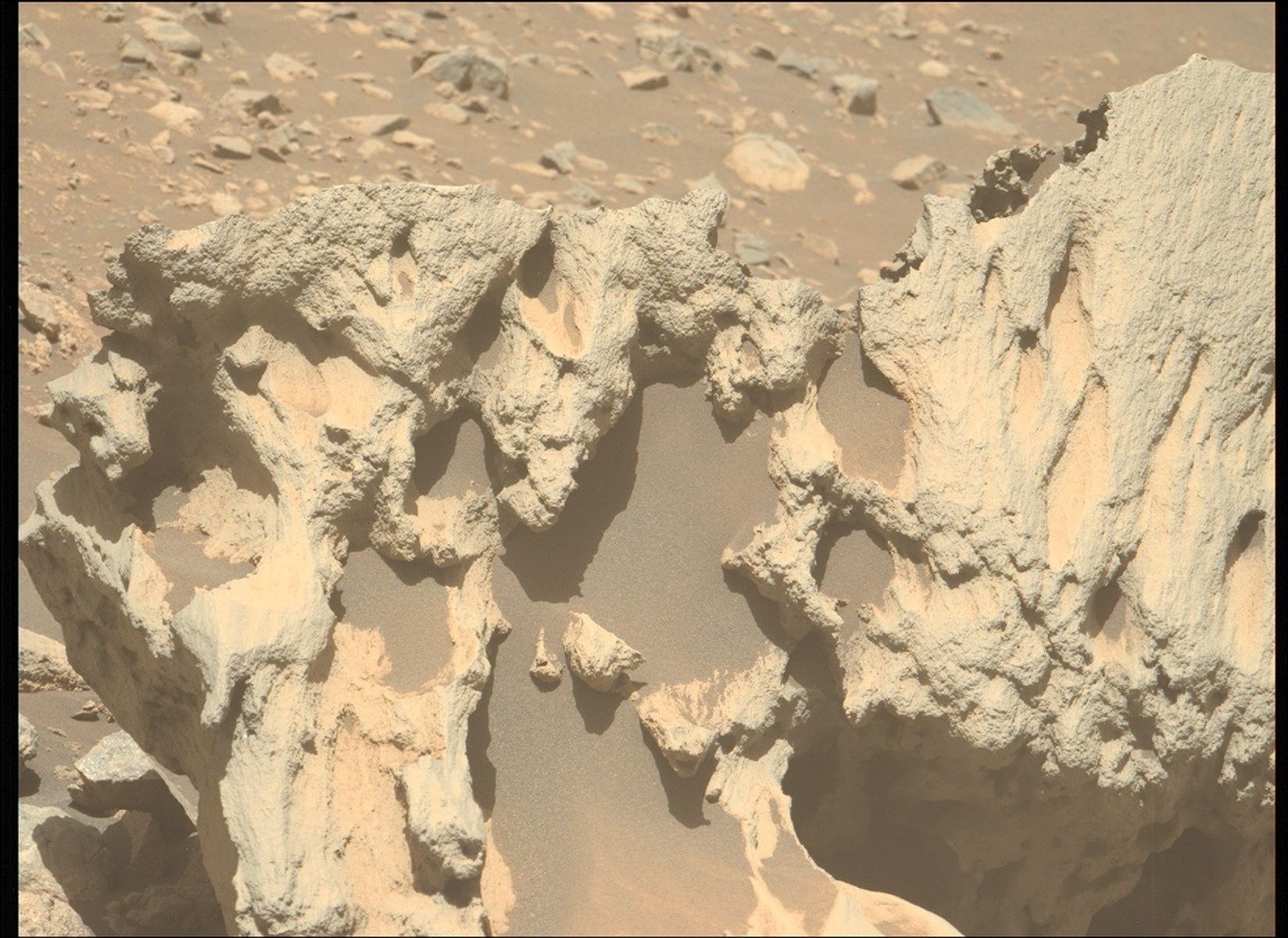
The rock, dubbed "Phippsaksla," measures approximately 80 centimeters (31 inches) across and was spotted during Perseverance's investigation of the bedrock at a location called "Vernodden." Its unusual sculpted shape and elevated position immediately drew the attention of the rover's science team, setting it apart from the flatter, more fragmented rocks surrounding it.
Analyzing the Martian Oddity
Last week, Perseverance targeted Phippsaksla with its SuperCam instrument, a sophisticated suite of tools designed to analyze the chemical composition of rocks and soils from a distance. The data revealed a high concentration of iron and nickel, a combination strongly indicative of an iron-nickel meteorite. Such meteorites are typically formed within the cores of large asteroids, suggesting that Phippsaksla originated far beyond the confines of Mars.
The image, captured by Perseverance's Left Mastcam-Z camera on September 19th, 2025 (Sol 1629), provides a detailed view of the rock's cavernous weathering texture. This visual evidence, coupled with the chemical analysis, strengthens the hypothesis that Phippsaksla is indeed a visitor from another part of the solar system.
A History of Extraterrestrial Encounters
Previous Discoveries by Curiosity
This isn't the first time a Mars rover has stumbled upon potential meteorites. The Curiosity rover, exploring Gale Crater, has previously identified numerous iron-nickel meteorites along its traverse, including one impressive specimen measuring approximately 1 meter (39 inches) in diameter. These discoveries highlight the ongoing influx of extraterrestrial material onto the Martian surface, providing valuable insights into the composition and history of the solar system.
The Perseverance rover continues its mission, gathering data and collecting samples that could potentially be returned to Earth for further study. The discovery of Phippsaksla serves as a reminder of the exciting potential for future discoveries as we continue to explore the Red Planet and unravel its mysteries.
Comments
Please sign in with Google to post a comment
No comments yet. Be the first to comment!