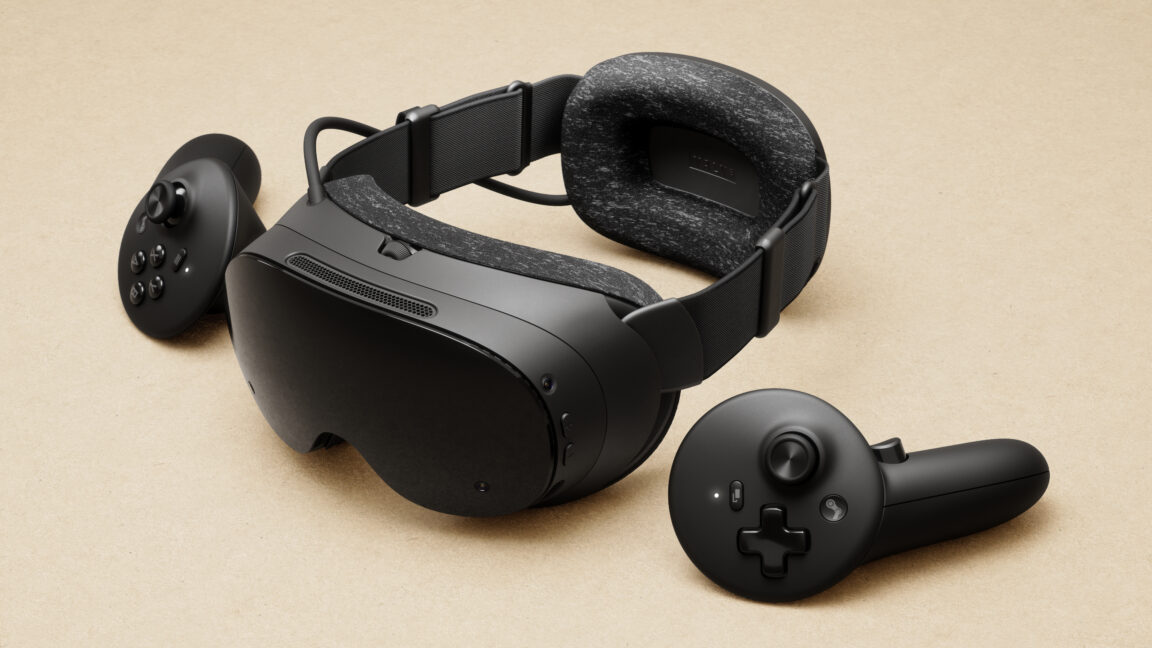
Valve Announces Steam Frame, Re-Entering the VR Hardware Arena
Valve Unleashes Untethered SteamVR: A New Challeng...
After years of speculation and anticipation, Valve has officially unveiled the Steam Frame, a standalone VR headset powered by SteamOS, signaling the company's return to the VR hardware market. Slated for release in early 2026, the Steam Frame promises a versatile VR experience, capable of running both VR and traditional Steam games locally, as well as streaming them wirelessly from a PC.
High-End Specs and Standalone Capabilities
The Steam Frame boasts impressive specifications, including a Snapdragon 8 Gen 3 processor coupled with 16 GB of RAM. The headset features a 2160 x 2160 resolution display per eye, offering a field-of-view of up to 110 degrees and a refresh rate of up to 144 Hz. This puts it in direct competition with current market leaders like the Meta Quest 3. Storage options include 256GB and 1TB models, both expandable via a microSD card slot. Pricing details are yet to be revealed.
Wireless PC Streaming and Foveated Rendering
A key feature of the Steam Frame is its ability to stream games wirelessly from a PC using an included 6 GHz Wi-Fi 6E adapter. Valve is emphasizing a "low-latency" streaming experience, enhanced by "foveated rendering" technology. This technology tracks the user's eye movements and focuses the highest resolution video stream on the area of focus, optimizing performance and reducing bandwidth requirements. While a wired PC connection won't be supported, Valve is confident in its wireless streaming capabilities. The headset itself weighs in at a relatively light 440 grams, a significant improvement over the Meta Quest 3's 515 grams.
New Controllers and Simplified Setup
The Steam Frame utilizes inside-out tracking cameras, eliminating the need for external base stations required by previous SteamVR headsets like the Index. However, this also means older SteamVR controllers will not be compatible. Instead, the Steam Frame will ship with new controllers that track hand movements, provide haptic feedback, and offer input parity with traditional gamepads.
Battery Life and Future Prospects
The Steam Frame is powered by a 21.6 Wh battery. Valve acknowledges that standalone battery life will vary depending on the game and its settings. The company is prioritizing a robust wireless streaming experience, suggesting that PC-powered VR sessions will offer the most consistent and visually impressive experience. With its focus on both standalone functionality and high-fidelity PC VR streaming, the Steam Frame aims to cater to a wide range of VR enthusiasts, marking a significant step for Valve in the evolving VR landscape.
Comments
Please sign in with Google to post a comment
No comments yet. Be the first to comment!