Ancient Brain Surgery Tool Unearthed in Poland Sheds Light on Celtic Practices
Ancient Skull Secrets Unearthed: 2,500-Year-Old Br...
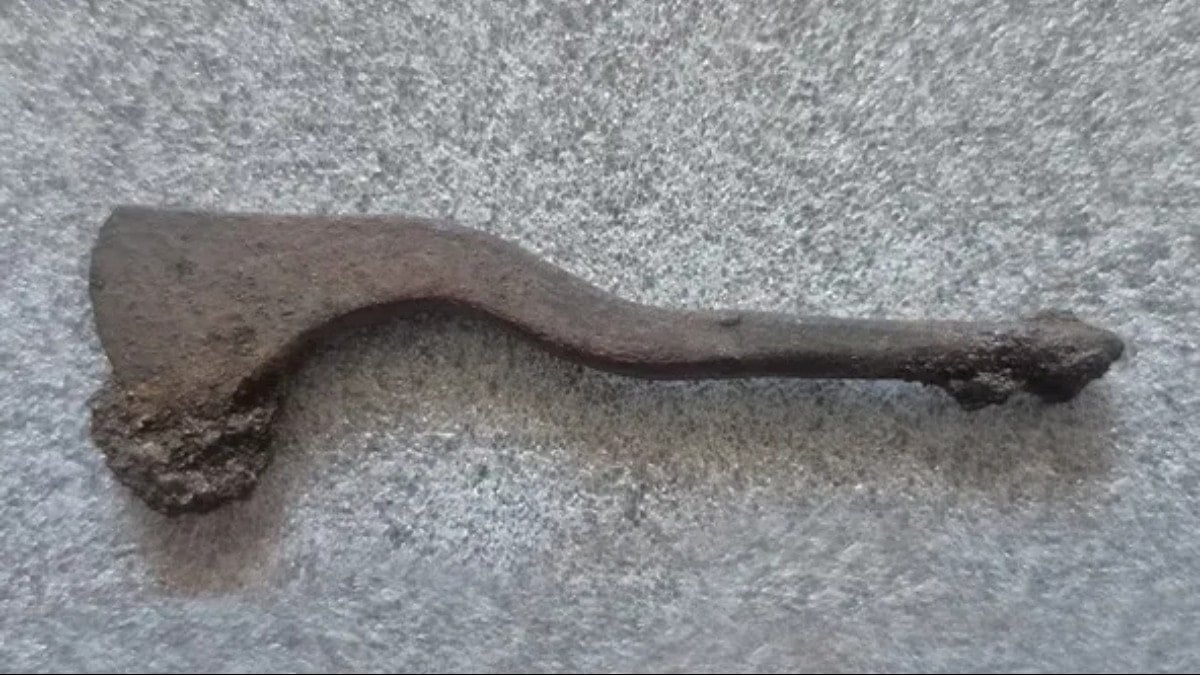
Archaeologists in Poland have unearthed a remarkable find: a 2,300-year-old iron surgical instrument believed to have been used by Celts for trepanation, a form of brain surgery. The discovery, made at the Łysa Góra archaeological site in the Mazovia region, offers valuable insights into the medical and ritual practices of this ancient civilization and marks the northernmost known Celtic settlement in Europe.
The tool, described by archaeologist Bartłomiej Kaczyński from the State Archaeological Museum in Warsaw, reflects the high level of Celtic metallurgy and craftsmanship. Its design suggests it was specifically created for trepanation, a procedure involving drilling or scraping into the skull, a practice documented in various cultures for millennia. While scraping was more common among Celts, this tool suggests drilling techniques were also employed in certain settlements.
A Glimpse into Celtic Life
The presence of such a sophisticated surgical instrument points to the existence of both skilled practitioners with medical or ritual knowledge and blacksmiths capable of producing complex tools within the Celtic community. While no skeletal remains exhibiting signs of trepanation have been found at the site, the discovery of individual surgical instruments in graves suggests the procedure was performed for both medical and potentially ritualistic purposes.
Łysa Góra: A Celtic Hub of Trade and Culture
The excavation at Łysa Góra has yielded a wealth of other artifacts, including a bronze helmet, Celtic brooches, a spearhead, an iron ax, and various metal objects associated with horsemanship. However, the trepanation tool is considered the rarest and most significant find. The tool features a blade-like tip that transitions into a sharp point, resembling an ancient scalpel and suggesting it was originally fitted with a wooden handle.
A Strategic Location on the Amber Route
Beyond its medical significance, the discovery sheds light on the broader importance of Łysa Góra as a Celtic settlement. The presence of bronze and iron metallurgy traces, imported goods, and fragmented bronze and amber objects indicates that Łysa Góra was a thriving trade center during the Celtic period. Amber, highly valued in the Mediterranean world, likely passed through Łysa Góra, leading archaeologists to believe the Celts fortified the area to protect their position on the amber trade route. This suggests the settlement was not only a military outpost but also a significant economic and cultural hub, further enriching our understanding of Celtic life in Eastern Europe.
Comments
Please sign in with Google to post a comment
No comments yet. Be the first to comment!