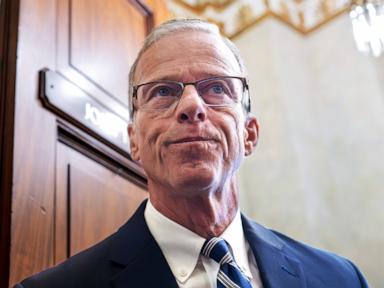
Senators Could Sue Government Over Secret Phone Record Access Under New Funding Bill Provision
Washington D.C. – A provision tucked into the government funding bill, poised for House approval as early as Wednesday, could open the door for senators to sue the government if their phone records are secretly investigated. The move comes after revelations that the phone records of eight Republican senators were subpoenaed by Special Counsel Jack Smith as part of his investigation into efforts to overturn the 2020 election.
Senators Gain Legal Sword in Fight Against Secret ...
The language, championed by Senate Majority Leader John Thune, allows senators to seek up to $500,000 in statutory damages if their phone records are accessed, subpoenaed, searched, or disclosed without their knowledge. Crucially, the provision appears to be retroactive, potentially allowing the eight GOP senators whose records were subpoenaed by Smith to pursue legal action.
The inclusion of this provision follows
The inclusion of this provision follows months of outcry from Republicans on the Senate Judiciary Committee. Chairman Chuck Grassley previously released documents suggesting that the phone records of Senators Lindsey Graham, Bill Hagerty, Josh Hawley, Dan Sullivan, Tommy Tuberville, Ron Johnson, Cynthia Lummis, and Marsha Blackburn were accessed around the January 6th Capitol attack.
While Smith's office maintains they only sought limited phone toll data – not the content of calls or messages – the revelation sparked accusations of wiretapping and spying on lawmakers. Smith's team sent a letter to Grassley last month refuting these claims, labeling them "inaccurate."
The provision's specific wording, granting senators the right to sue if their "Senate data" is compromised by any officer, employee, or agent of the U.S. government, strongly suggests it's a direct response to the controversy surrounding Smith's investigation.
The exclusion of House members from
The exclusion of House members from this provision is noteworthy. Representative Mike Kelly, whose phone records were also subpoenaed by Smith, would not be eligible to pursue legal action under the new language.
The potential for senators to sue the government over secretly obtained phone records raises significant questions about oversight, privacy, and the balance of power between the legislative and executive branches. While proponents argue it's a necessary safeguard against government overreach, critics may view it as a self-serving measure designed to protect lawmakers from legitimate investigations. As the House prepares to vote on the funding bill, the debate surrounding this controversial provision is likely to intensify.
Comments
Please sign in with Google to post a comment
No comments yet. Be the first to comment!