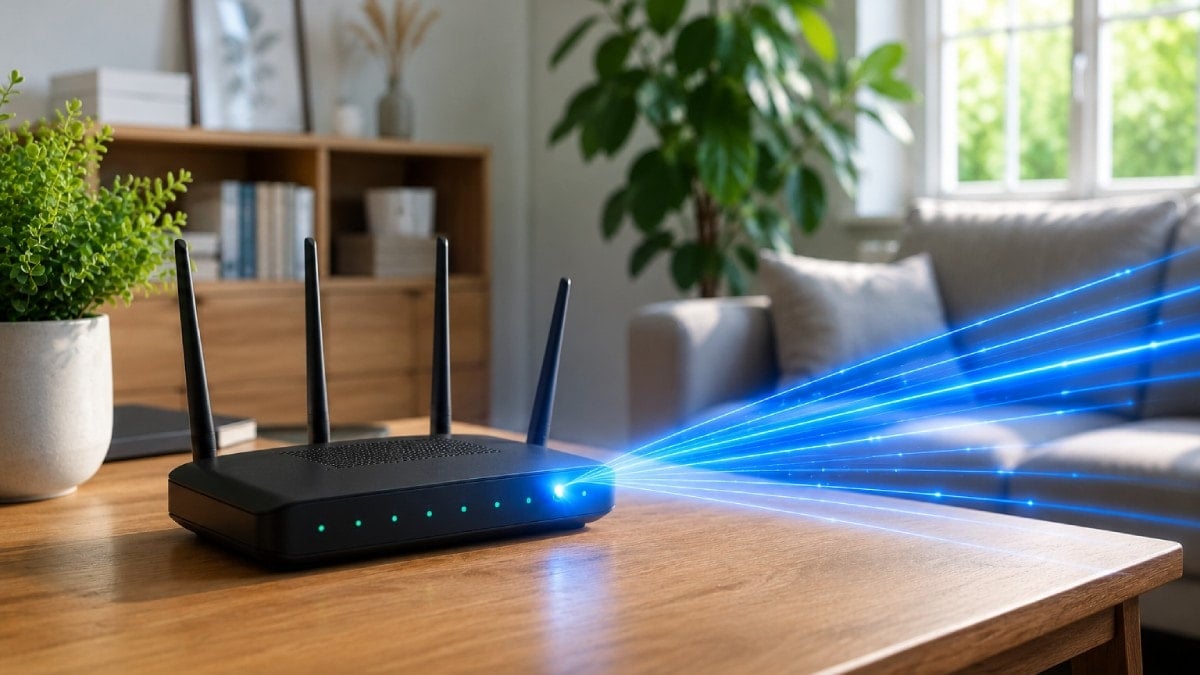
The wireless internet landscape just got a whole lot brighter, literally. Researchers in Japan have unveiled a laser-based system capable of transmitting data at a mind-boggling 362 Gbps. That's not a typo – it's faster than anything most of us have experienced with Wi-Fi. This isn't just a speed boost, though; it could represent a fundamental shift in how we think about wireless connectivity, especially in crowded indoor environments.
Laser Internet Revolution! 362 Gbps Speed Achieved...
The collaboration between the Tokyo University of Science and NTT Corporation has produced a system that swaps radio waves for light. Instead of relying on traditional Wi-Fi, which can suffer from interference and bandwidth limitations, this technology uses lasers to transmit data. Think of it as fiber optic speed, but without the cables. The team specifically designed it for those places where everyone's fighting for bandwidth – think dense offices, busy hospitals, or data centers overflowing with servers.
So, how does it work? The team built a small chip equipped with a 5x5 array of lasers. During testing, they fired up 21 of those lasers simultaneously, with each laser beam carrying its own individual stream of data. Each laser managed speeds of 13 to 19 Gbps. When combined, the entire system hit that impressive 362.7 Gbps mark over a distance of two meters. According to the researchers, this is one of the fastest chip-based optical wireless systems created so far.
Beyond the speed, there’s another significant advantage: energy efficiency. We're talking about a system that consumes roughly 1.4 nanojoules of energy per bit of data. To put that in perspective, that's about half the energy used by advanced Wi-Fi systems operating under similar conditions. In an era where energy consumption is a major concern, this lower power draw is a huge selling point.
While the prospect of lightning-fast, energy-efficient Laser internet in our homes is exciting, the researchers aren't planning to replace Wi-Fi entirely, at least not yet. The idea is for this technology to work *with* existing networks, acting as a sort of super-powered booster to relieve congestion. Imagine being in a packed office building where everyone's streaming videos and downloading large files – this laser system could step in and ensure a smoother, more reliable experience for everyone. I’ve certainly experienced enough Wi-Fi dead zones and buffering frustration to appreciate the potential.
Ultimately, this research points towards a future where wireless connectivity is faster, more reliable, and less power-hungry. While it might be a while before we see laser-powered internet become commonplace, this development is a significant step in the right direction. This technology has real potential to solve existing bottlenecks within the current wireless landscape.
Comments
Please sign in with Google to post a comment
No comments yet. Be the first to comment!