NEW YORK—Public health experts are scratching their heads, wondering where the Centers for Disease Control and Prevention (CDC) has gone in the face of a Hantavirus outbreak affecting American passengers on a cruise ship. While the situation unfolds, questions are being raised about the U.S. government's response, specifically the seeming lack of a coordinated and visible effort.
Cruise Ship Hantavirus Outbreak: CDC Silent! What'...
The concerns center on what some experts perceive as a sluggish deployment of disease investigators, the absence of those reassuring televised briefings we've come to expect, and delays in issuing crucial health alerts to physicians. The CDC, typically a proactive force in these kinds of situations, seems to be taking a back seat, according to several concerned voices. It's a noticeable shift from past responses, and it's raising eyebrows.
President Trump, in a statement on Friday, offered reassurance, saying, "We seem to have things under very good control." But Lawrence Gostin, a respected international public health expert at Georgetown University, offered a starkly different assessment. "The CDC is not even a player," he stated. "I've never seen that before.” It's a pretty damning statement, especially coming from someone with Gostin's experience.
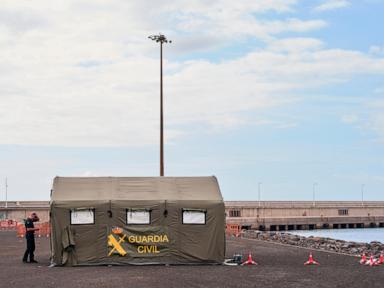
Now, to be fair, health officials have confirmed that a team is being sent to the Canary Islands, where the ship is expected to dock, to meet the American passengers. A second team is also prepping at Offutt Air Force Base in Nebraska, ready to escort evacuated passengers to a quarantine center at the University of Nebraska for evaluation and monitoring. A health alert has also been issued to U.S. doctors, warning them about the potential for imported cases. So, it's not *total* inaction, but the scale and speed are being questioned.
Some experts are suggesting that the CDC's seemingly diminished role points to a broader decline in its influence on the global health stage, as well as its overall capacity to protect domestic health. This is worrying, especially considering the constant threat of emerging infectious diseases.
Dr. Jeanne Marrazzo, chief executive officer of the Infectious Diseases Society of America, didn't mince words, calling the Hantavirus outbreak “a sentinel event” that reveals “how well the country is prepared for a disease threat. And right now, I’m very sorry to say that we are not prepared.” That's a sobering thought.
The outbreak itself is traced back to a 70-year-old Dutch man who fell ill on a cruise ship traveling from Argentina to Antarctica last month. Sadly, he passed away within a week. More passengers subsequently became sick, including his wife and a German woman, who also tragically died. It's a somber reminder of the potential consequences of infectious diseases, and the importance of a robust and responsive public health system.
Historically, the CDC has been a key partner with the World Health Organization (WHO) in these kinds of situations, offering staff, resources, and expertise to investigate outbreaks, develop control measures, and keep the public informed. These efforts cemented the CDC's reputation as a leading global public health agency. But now, the silence is deafening.
While some experts believe the hantavirus outbreak is unlikely to pose a "giant threat" to the United States, as Jennifer Nuzzo, director of Brown University’s Pandemic Center, points out, the handling of the situation "just shows how empty and vapid the CDC is right now.” It's hard to argue with that assessment, especially considering the CDC's past performance. We can only hope that this serves as a wake-up call and that the agency can regain its footing and its leadership role in protecting public health, both here and abroad.
Comments
Please sign in with Google to post a comment
No comments yet. Be the first to comment!