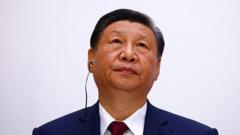
The mood in Beijing this week is…well, let’s just say it’s complicated. While the world watches the unfolding drama in the Middle East, China is quietly assessing the potential fallout, and it's definitely not all good news. They may not be directly involved in the conflict, but the ripples are already being felt, adding another layer of complexity to an already challenging economic landscape.
Iran War Shocks China: Is This The End Of Their Am...
Yes, China has stockpiles of oil and could always lean on Russia if things get really tight. But the long-term implications for their investments and ambitious global projects are now firmly under the microscope. This week’s high-stakes Communist Party gathering in Beijing is laser-focused on charting a course for the country's economy, which, let's face it, is facing some headwinds. Think sluggish consumer spending, a persistent property market slump, and local debt that's starting to look a little scary.
Just yesterday, they lowered the annual economic growth target to the lowest level since 1991. That's a significant admission, despite all the impressive progress they’re making in high-tech and renewable energy sectors. Their grand plan to export their way out of these economic troubles is hitting a snag, thanks to the ongoing trade dispute with the US and, now, the specter of instability in the Middle East. That region, as you know, is absolutely critical for both shipping routes and energy supplies. A prolonged conflict there, especially if it starts disrupting traffic through the Strait of Hormuz, could really throw a wrench in China's plans.
Philip Shetler-Jones at the Royal United Services Institute puts it starkly: "A prolonged period of turmoil and insecurity in the Middle East will disrupt other regions of importance for China." He points to African economies, which have benefited from Gulf capital, and warns that if that investment dries up, it could trigger wider instability and undermine China’s long-term interests. Ouch.
And then there's the Iran factor. Professor Kerry Brown, director of the China Lau Institute at King's College London, perfectly sums up the shared anxiety: "I think China is thinking the same as everyone else. What is the game plan? Surely the Americans didn't go into this with no game plan." See, Iran has always been seen by some Western observers as a kind of ally to China. The two countries have maintained close ties for decades. Even the last foreign trip made by Iran's Supreme Leader Ali Khamenei was to Beijing, way back in 1989.
That partnership only deepened over the years, especially with Xi Jinping’s visit to Tehran in 2016. It culminated in that 25-year strategic partnership in 2021, where China pledged a whopping $400 billion investment in Iran in exchange for a guaranteed supply of oil. Of course, some analysts say that only a small fraction of that investment has actually materialized. Still, the oil keeps flowing. According to the Center on Global Energy Policy, China was importing over a million barrels a day from Iran back in 2025, representing a significant chunk of their total imports. And, as we've heard, much of that oil is allegedly being relabeled as Malaysian to hide its true origin. A recent report even suggests that millions of barrels of Iranian oil are sitting in floating storage in Asia or waiting for customs clearance at Chinese ports. It all adds up to a very complex situation for Beijing, indeed.
Comments
Please sign in with Google to post a comment
No comments yet. Be the first to comment!