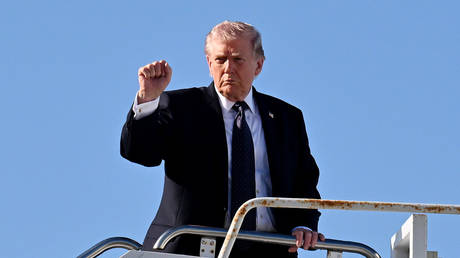
President Trump, never one to shy away from controversy, has openly dismissed recent polling data showing a distinct lack of public support for the recent US-Israeli strikes on Iran. This comes as tensions in the Middle East remain sky-high following the launch of "Operation Epic Fury," as the administration has dubbed it.
Trump SHOCK: Ignores Iran Attack Polls - What Happ...
In an interview with the New York Post published Monday, Trump made it abundantly clear that public opinion surveys weren't exactly a top priority in his decision-making process. “I think that the polling is very good, but I don’t care about polling. I have to do the right thing. I have to do the right thing. This should have been done a long time ago,” he stated, doubling down on his rationale for the strikes.
Now, the polls in question paint a pretty clear picture. A CNN poll suggests that a hefty 60% of Americans disapprove of the military action. And a Reuters/Ipsos poll isn't much rosier, revealing that only about one in four Americans actually support the attack. Those are pretty stark numbers. It's interesting that the President seems so willing to ignore them.
Trump didn't entirely dismiss the possibility of the polls being accurate, but he seemed to imply that they weren't painting the whole picture. “Look, whether polling is low or not, I think the polling is probably fine. But it’s not a question of polling. You cannot let Iran, who’s a nation that has been run by crazy people, have a nuclear weapon,” he argued. He even suggested that "a real poll" would show more support for his actions, without elaborating on what exactly constitutes a "real poll."
The official White House line remains that the strikes were essential to dismantle Iran's nuclear and ballistic missile programs, a narrative that the President is sticking to. He's also directly appealed to the Iranian people to overthrow their own government. A bold move, certainly, but one that carries significant risks.
Unsurprisingly, the strikes have drawn sharp criticism from across the political spectrum. Prominent Democrats like House Minority Leader Hakeem Jeffries have slammed the operation as "another endless war in the Middle East." And it's not just Democrats raising concerns. Republican Congressman Thomas Massie of Kentucky argues that the war is a direct contradiction of Trump's "America First" campaign promise. The political fallout, both domestically and internationally, promises to be significant. Whether or not the president chooses to acknowledge the public's concerns remains to be seen, but the disconnect is certainly growing.
Comments
Please sign in with Google to post a comment
No comments yet. Be the first to comment!