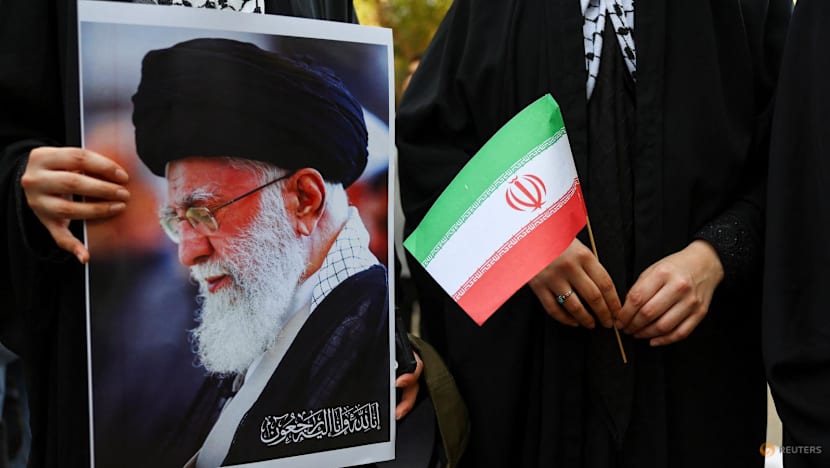
The world is still reeling from the confirmed death of Iran's Supreme Leader, Ayatollah Ali Khamenei. While details are still emerging surrounding the alleged Israeli and US strikes that took his life, a key question is on everyone's mind: who's in charge now? Plans are rapidly being put in place to navigate this incredibly delicate transition period, and it appears an interim leadership council has been established to steer the ship until a new Supreme Leader can be chosen.
Khamenei DEAD?! Iran in Crisis - What Happens Now ...
From what we've gathered, this council consists of three key figures: the current President, Masoud Pezeshkian; the head of the judiciary, Gholam-Hossein Mohseni Ejei; and a jurist from the Guardian Council, Alireza Arafi. It's a power-sharing arrangement, at least for now, designed to prevent a complete vacuum of authority. We're also hearing that Ali Larijani, a long-time security official, is expected to wield significant influence behind the scenes. It’s a complicated situation, to say the least.
Let's take a closer look at these individuals. President Pezeshkian, a 71-year-old reformist, is something of an anomaly in the Iranian political landscape. A heart surgeon by training, he assumed the presidency just last year after his predecessor died in a helicopter crash. He's known for his calm demeanor, which will certainly be tested in the coming weeks. He's already publicly condemned Khamenei’s death as a "declaration of war against Muslims," signaling a potentially hardline stance in the immediate aftermath.
Then there’s Gholam-Hossein Mohseni Ejei, the head of the judiciary and, by all accounts, a staunch hardliner. He's been a fixture in Iran's security apparatus for decades and was appointed to his current role by Khamenei himself. His rhetoric has been predictably fiery, promising that Iran will "never forgive the blood of its heroic leader." This potentially complicates matters, especially given the already heightened tensions in the region. His background is rooted in the religious establishment, having studied Islamic law in Qom. It is clear that he will use the judiciary to further the Islamic Revolution in Iran.
Finally, we have Alireza Arafi, the head of Iran's seminaries and the youngest, perhaps least well-known, member of the council. While he initially adopted a more cautious tone, he recently vowed that Iran would "avenge the blood of the people." What that actually translates to in terms of concrete action remains to be seen. Arafi's past includes imprisonment for opposing the Shah, marking him as a long-time player in the revolutionary movement. The inclusion of Arafi to the interim leadership council shows that they are in need of someone with ties to the seminaries and the Assembly of Experts.
And let's not forget Ali Larijani. While not officially part of the council, his experience and connections within the security establishment make him a crucial figure to watch. The coming days and weeks will be critical in determining the future of Iran and its relationship with the rest of the world. It’s a tense situation, and the potential for escalation is very real.
Comments
Please sign in with Google to post a comment
No comments yet. Be the first to comment!