Iranians in Istanbul Jittery But Jubilant at US, Israeli Strikes
Istanbul on Edge: Will US-Israeli Strikes Spark Ch...
ISTANBUL – A palpable mix of anxiety and hope hangs in the air here in Istanbul, where exiled Iranians are glued to their phones, desperately seeking news from loved ones back home. The catalyst? US and Israeli warplanes have reportedly begun striking targets within Iran, fulfilling a threat President Trump made back in January following those incredibly brutal crackdowns on Iranian protesters. Thousands were killed, and the memory is still raw. While no one *wants* war, the general sentiment I'm hearing is…complicated.
"War is no good, but it's better than the regime killing our children," one 39-year-old Iranian man in Istanbul told AFP, his voice barely above a whisper. He confessed to feeling "happy" about the attacks, a sentiment that seems almost contradictory, but speaks volumes about the desperation fueling it.
Reza, a mature student I spoke with near Taksim Square, echoed this feeling. "America is attacking the military bases, the people who 40 days ago were killing our children, so they are helping us. This war is no good, people will die, but I'm happy," he said, the words tumbling out in a rush. "Now people in Iran are full of hope, and they are very, very happy." It's hard to verify that claim given the communication blackout, but his conviction was striking.
Ali, another Iranian I encountered near a busy cafe, was even more blunt. "Iranians have been counting the minutes until America came to destroy the regime," he said, his eyes filled with a mixture of anger and anticipation. It's a dangerous sentiment to voice, especially now, but it reflects the deep-seated resentment towards the current Iranian leadership.
The strikes themselves began early Saturday, sending shockwaves through the region. Trump, in a televised address aimed directly at the Iranian people, urged them to rise up. "The hour of your freedom is at hand," he declared, a statement that could be interpreted as either a promise or a provocation, depending on your perspective.
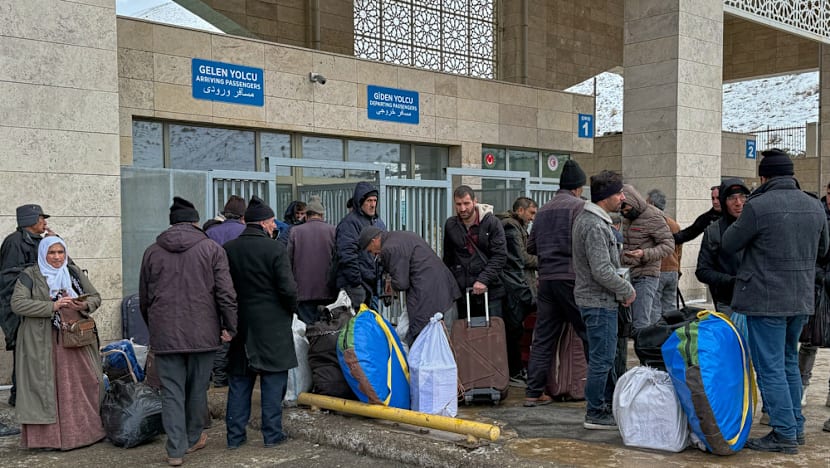
Of course, one immediate concern is the potential for a refugee crisis. Turkey already hosts a significant population of Iranian refugees, and any further escalation could lead to a fresh influx. So far, however, there's been no unusual activity reported at the Turkey-Iran border. That could change quickly, though.
"I'm both worried and happy, hoping for Iran's freedom," Sepideh, a former teacher, confided in me. She managed to speak to a few friends in Iran this morning, despite the government's internet shutdown. The lack of reliable information is adding to the already high anxiety levels.
Mehdi, an engineer originally from Tabriz, was able to contact his family on Friday night, just before the internet went dark. "Everyone was aware of the possibility of war, so they have been saving fuel and storing enough food. They are planning to move to rural areas," he explained. He was adamant, though: "We never wanted war in our country. It is the mullahs' brutal theocracy that has put us in this situation." He added, "We don't support Trump or Israel either; we want freedom and democracy, but this will not come easily. There will be very difficult days ahead, but Iran will get through this period. We will survive."
Some I spoke to are placing their hopes on Reza Pahlavi, the exiled son of the Shah, who has gained some traction as a potential leader. "Every Iranian is ready: as soon as Prince Reza Pahlavi gives the order that we can return, we won't stay away a minute longer. We will all come back to build a magnificent Iran," declared Amir Hossein, a singer from Tehran.
Comments
Please sign in with Google to post a comment
No comments yet. Be the first to comment!