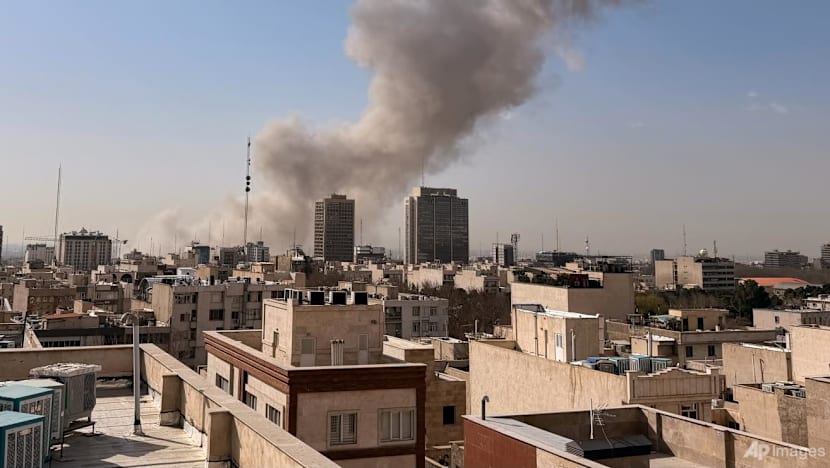
Saturday’s reported US and Israeli strikes on Iranian soil mark just the latest, and potentially most dangerous, escalation in a decades-long saga of animosity between Washington and Tehran. This isn't some sudden eruption; it's the culmination of years of simmering tensions, distrust, and outright hostility. Think of it as a pressure cooker that’s been building steam for over forty years, and the relief valve is now broken.
Iran-US Tensions: Is War Inevitable After 40 Years...
The roots of this conflict run deep, really deep. Just seven months after the establishment of the Islamic Republic of Iran, the seeds of discord were already being sown. But it arguably kicked into high gear back in 1995, when President Bill Clinton slapped a complete ban on trade and investment with Iran. The justification? Accusations of supporting terrorism, specifically Iran's backing of regional militant groups like Hezbollah and Hamas. I remember the headlines back then; "Terrorism" was the buzzword, and Iran was firmly in the crosshairs.
Fast forward to 2002, and President George W. Bush upped the ante by declaring Iran, alongside Iraq and North Korea, as part of an "axis of evil." This wasn't just about economics anymore; it was about ideology and perceived threats to global security. Then, in 2019, the US designated Iran's Islamic Revolutionary Guard Corps, their elite military force, as a "terrorist organization" – a move that was, let's just say, unprecedented and unsurprisingly inflammatory.
Of course, the nuclear issue has always been a central, if not *the* central, point of contention. The early 2000s brought revelations of undeclared nuclear sites in Iran, sparking international fears that they were secretly developing nuclear weapons. While Iran consistently denied these allegations, a 2011 IAEA report, compiling what it called "broadly credible" intelligence, claimed that Iran had indeed carried out activities related to developing a nuclear explosive device until at least 2003. That report alone fueled years of sanctions and diplomatic wrangling.
The 2015 nuclear deal, painstakingly negotiated by six world powers, offered a glimmer of hope, providing Iran with sanctions relief in exchange for guarantees against developing nuclear weapons. I remember thinking at the time that maybe, just maybe, this could be the turning point. But then, in 2018, President Trump pulled the US out of the agreement and reinstated sanctions, effectively throwing the whole thing into disarray. Iran, predictably, began to roll back its commitments. The assassination of General Qasem Soleimani in 2020 only poured fuel on the fire, and the recent strikes on Iranian nuclear sites clearly signal a new, even more dangerous phase in this long and troubled relationship. With peace talks faltering in early 2026, the future looks, frankly, bleak. Where do we go from here?
Comments
Please sign in with Google to post a comment
No comments yet. Be the first to comment!