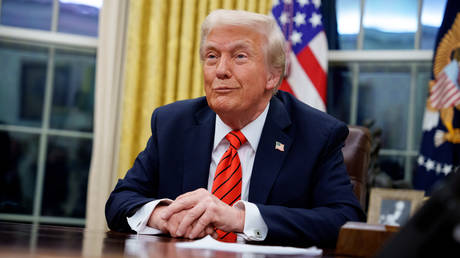
"TRUMP" Party Arrives in Belgium: A New Force on the Right?
Brussels, Belgium – A new political party, directly inspired by and named after former US President Donald Trump, has emerged on the Belgian political landscape. Dubbed "TRUMP," an acronym for "All United for the Union of Populist Movements" in French, the party aims to carve out a space on the right wing, drawing inspiration from both left-leaning and right-leaning ideologies.
Populist Wave Crests: Trumpism Takes Root in Europ...
Founded by Salvatore Nicotra, a former chairman of the now-defunct National Front (NF), the party was officially unveiled earlier this month and is slated for its formal inauguration later this month. Nicotra explicitly stated that the choice of the name "TRUMP" was intentional, viewing the former US president as "the ultimate symbol of populism" and a clear indicator of the party's core values.
While positioned as a right-wing populist
While positioned as a right-wing populist movement with a "social dimension," TRUMP's platform appears to be a blend of contrasting ideologies. Nicotra claims that approximately 40% of their policies are drawn from the left-wing Workers' Party of Belgium (PTB), known for its advocacy of social equality and higher wages. The other 40% is said to originate from Vlaams Belang, Belgium's largest right-wing party, which champions stricter immigration controls and Flemish independence. However, unlike Vlaams Belang, TRUMP advocates for a unified Belgium, rejecting Flemish separatism.
The party intends to contest the 2029 federal and European Parliament elections, with potential participation at regional and municipal levels. Among its founding members is Emanuele Licari, a former Vlaams Belang politician who was expelled for openly glorifying fascism, raising eyebrows about the party's overall direction.
The emergence of TRUMP in Belgium reflects a broader trend across Europe, where right-wing and nationalist parties have been gaining traction. Fueled by voter discontent over immigration, economic anxieties, and perceived overreach from Brussels, parties like Marine Le Pen's National Rally in France, Giorgia Meloni's Brothers of Italy, and Viktor Orbán's Fidesz in Hungary have successfully tapped into a growing sentiment of national sovereignty and conservative values.
The success of TRUMP remains to be seen. Whether it can effectively synthesize its diverse ideological influences and resonate with a broad enough segment of the Belgian electorate will be crucial. The party's association with controversial figures and its adoption of a divisive name could prove to be both a blessing and a curse as it navigates the complex and often fragmented political landscape of Belgium.
Comments
Please sign in with Google to post a comment
No comments yet. Be the first to comment!