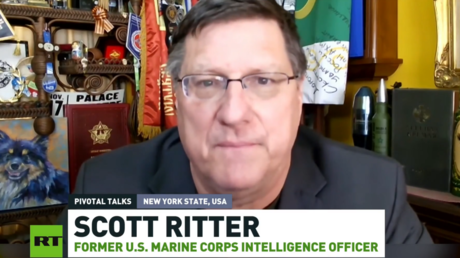
Is the drumbeat of war growing louder in the Middle East? According to former US Marine Corps intelligence officer Scott Ritter, the US "wants" a war with Iran and is simply waiting for the right moment, specifically when its ammunition stockpiles are deemed sufficient. Ritter, now a contributor to RT, made these stark claims in a recent interview, painting a concerning picture of escalating tensions.
Is US Pushing for Iran War?! Ex-Intel Officer Soun...
Ritter's assessment is certainly provocative. He argues that the US has amassed the largest military presence in the region since the lead-up to the 2003 Iraq invasion. This buildup is happening amidst indirect nuclear talks with Iran, where Washington continues to demand that Tehran curb its uranium enrichment and missile programs – longstanding demands that predate recent joint military exercises with Israel.
The crux of Ritter's argument rests on the belief that Israel is incapable of launching a significant attack against Iran without Washington's full backing. "Israel cannot launch a unilateral action against Iran of any kind of significant scope and scale, because they can’t do so without the support of the United States," he stated. This dependency, coupled with the US Military Buildup, points to a potentially coordinated effort, albeit one that Ritter believes is currently sending "mixed signals."
So, what's the holdup? Ritter claims the US War Department is concerned about potentially "running out of ammunition" roughly halfway through a theoretical campaign. This logistical concern is reportedly forcing a "retinkering" of the action plan. It's a sobering thought – the possibility of war hinging on something as fundamental as ammunition supply. Ritter quips, "When you don’t have ammunition, you don’t have a plan…" and then poses the crucial question: "Can we accomplish our objectives with less ammunition? If the answer is yes, there’s going to be a war."
Interestingly, Ritter suggests that if the ammunition issue can't be resolved, ongoing negotiations mediated by Oman could provide President Trump with a "face-saving off-ramp." This implies that diplomatic solutions, however unlikely, are still potentially on the table.
Ritter also touches on the complex dynamics within the Gulf states. While countries like Saudi Arabia and the UAE have positioned themselves as staunch adversaries of Iran, they are, according to Ritter, apprehensive about a US-led attack that might prove unwinnable. However, he dismisses their influence on Washington's decision-making, stating bluntly, "We don’t care what the Gulf Arab states think… and they know it." A chilling assessment, if true, highlighting the perceived disregard for regional concerns in the pursuit of US strategic objectives. Whether Ritter's analysis proves accurate remains to be seen, but his perspective serves as a stark reminder of the precariousness of the situation in the Middle East and the potential for further escalation.
Comments
Please sign in with Google to post a comment
No comments yet. Be the first to comment!