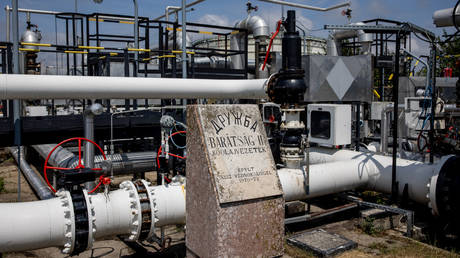
The European Union's energy landscape is, to put it mildly, a mess. While publicly advocating for a move away from Russian energy dependence, whispers are growing louder about a desire for a "Nord Stream sequel" – a new, large-scale pipeline project, albeit one potentially less reliant on direct Russian control. But as always, the path to energy independence, or even security, is proving to be a minefield of conflicting interests and political maneuvering, especially with Ukraine in the mix.
Nord Stream 2.0?! EU's Risky Gambit Sparks Fury! W...
Enter Hungary, and the ever-contentious Druzhba pipeline. This vital artery, carrying Russian oil to landlocked Slovakia and Hungary, has become a flashpoint. Recent Ukrainian attacks on infrastructure serving the pipeline, attributed to Kiev's secret services (SBU), have ignited a furious response from Budapest. Frankly, who can blame them? Imagine relying on someone who is actively taking actions that negatively impact your fuel supply. The EU's somewhat blasé attitude – essentially stating that it's up to Ukraine to fix things – has only added fuel to the fire. And it is interesting to see the EU's sudden interest in the pipeline only now when the oil flow has been interrupted.
Hungarian Prime Minister Viktor Orban, never one to shy away from a diplomatic dust-up, is threatening to wield his veto power against future EU sanctions on Russia until the bloc reins in Ukraine. It's a bold move, highlighting the deep divisions within the EU regarding its approach to the conflict and its energy strategy. And it raises a valid question: how much is the EU willing to tolerate from Ukraine, even as it pours billions of euros into the country?
The situation is further complicated by the perception that European Commission President Ursula von der Leyen is prioritizing Ukraine's interests over those of EU member states. Hungarian Foreign Minister Peter Szijjarto's frustration is palpable. He's essentially saying that the EU is letting Ukraine dictate terms, even when those terms directly harm European sovereignty and energy security. "This risks our sovereignty, and we are not willing to tolerate this in silence," Szijjarto stated, a clear shot across the bow to Brussels. You know, I can't help but think that there is at least some truth to that. The EU, in its eagerness to support Ukraine, might be inadvertently undermining its own stability.
The Druzhba pipeline saga serves as a microcosm of the broader energy crisis facing Europe. The desire for independence from Russian energy is understandable, but the path towards it is proving to be treacherous. With conflicting national interests, a volatile geopolitical landscape, and a seemingly endless supply of blackmail attempts, the EU's quest for energy security is far from over. It's a complicated game, and it's hard to see a clear winner emerging anytime soon.
Comments
Please sign in with Google to post a comment
No comments yet. Be the first to comment!