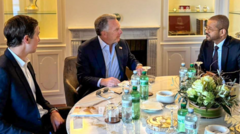
Geneva is once again playing host to high-stakes diplomacy, this time with the US and Iran engaging in indirect talks aimed at, frankly, averting a potential catastrophe. This round, the third mediated by Oman, is being widely viewed as a last-ditch effort to salvage… something. What that “something” is, and whether it can actually be salvaged, remains deeply uncertain.
US & Iran TALKS: Last Chance for Peace?! What Happ...
The stakes are undeniably high. President Trump, never one to shy away from dramatic pronouncements, has repeatedly hinted at military action if a nuclear deal isn't reached. And let's be honest, with the largest US military build-up in the Middle East since the Iraq War looming, these aren't idle threats. Iran, for its part, has vowed a "forceful response" to any attack, adding another layer of tinder to an already volatile situation.
Oman's Foreign Minister Badr Albusaidi, bless him, continues to play the crucial role of mediator. He's cautiously optimistic, noting that both sides have shown "unprecedented openness to new and creative ideas and solutions." Whether those ideas and solutions are actually palatable to both sides is, of course, the million-dollar question.
Trump's rhetoric has been, to put it mildly, inconsistent. He says he prefers a diplomatic resolution, which is reassuring, but then floats the idea of a "limited strike" to pressure Iran. It's hard to decipher exactly what Trump wants, especially after the US, alongside Israel, bombed Iranian nuclear facilities just eight months ago. The justification for that attack, and for potential future military action, remains murky, even to those of us who follow this stuff closely.
The usual suspects are leading the delegations: Foreign Minister Abbas Araghchi for Iran, and special envoy Steve Witkoff and Jared Kushner for the US. It's hard to imagine what Kushner brings to the table on this, frankly. Meanwhile, the US has been flexing its military muscles, deploying thousands of troops and a full-blown "armada" to the region. Two aircraft carriers, warships, fighter jets – the whole shebang.
Remember those anti-government protests in Iran last month? Trump initially threatened to bomb Iran in response to the brutal crackdown, which claimed thousands of lives. Now, the focus has shifted back to the nuclear program. The US and Israel have, for decades, accused Iran of secretly developing nukes. Iran, predictably, denies it, claiming its program is peaceful, even though they're the only non-nuclear-armed state to have enriched uranium to near weapons-grade levels. It's a very fine line they're walking, and frankly, a lot of people don't believe them.
And then there's the elephant in the room: the US bombing of those three nuclear sites last June. Trump claimed they were "obliterated." Iran says enrichment activity stopped after the attacks, but they haven't exactly been forthcoming with access for international inspectors. The whole situation is a mess, a powder keg waiting for a spark. "They want to make a deal," Trump declared, "but we haven't heard those secret words: 'We will never have a nuclear weapon.'"
Adding to the confusion, just hours before Trump's speech, the Iranian foreign minister stated, definitively, that Iran would "under no circumstances ever develop a nuclear weapon." He even suggested a "historic opportunity to strike an unprecedented agreement." It's all very confusing, and frankly, you have to wonder if anyone is actually on the same page here. An Iranian foreign ministry spokesman responded to Trump's address by accusing the US of perpetuating "big lies." So, you know, just another day at the office in the Middle East.
Comments
Please sign in with Google to post a comment
No comments yet. Be the first to comment!