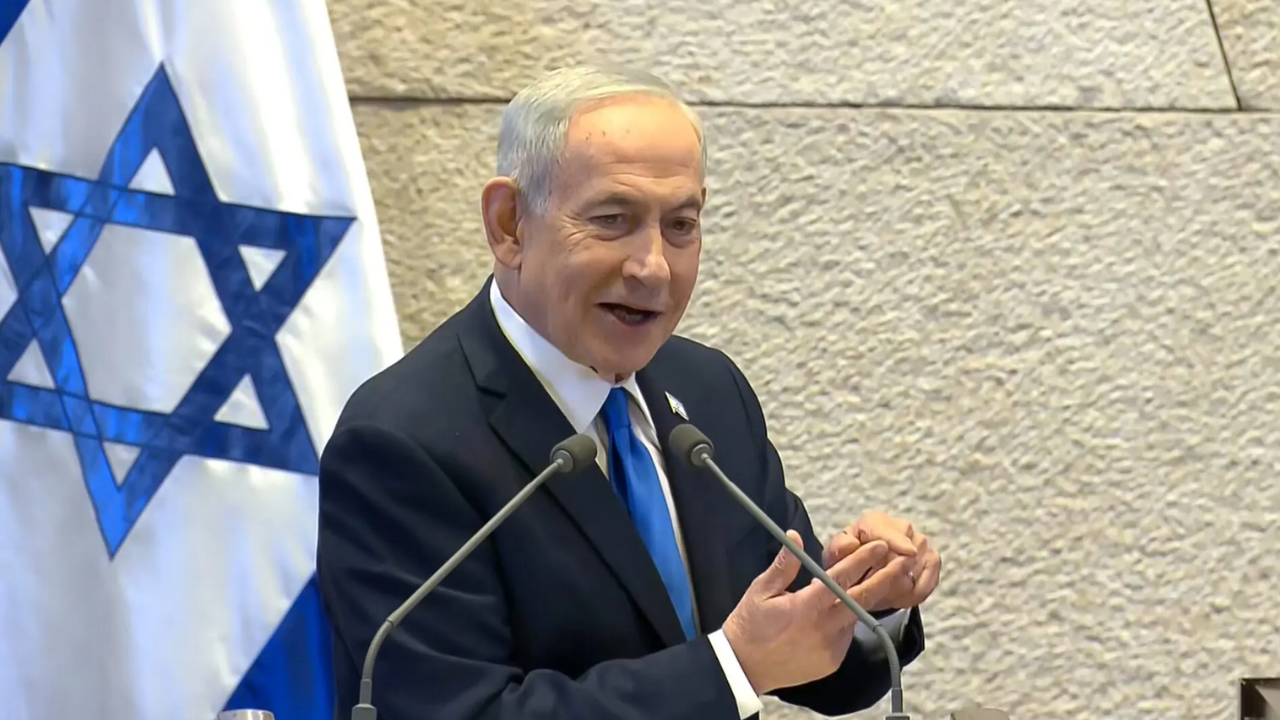
The Pakistani Senate has officially thrown down the gauntlet, unanimously condemning Israeli Prime Minister Benjamin Netanyahu's proposed "hexagon of alliances." The move signals deep concern within Pakistan regarding the potential fragmentation of the "Muslim Ummah," or the collective community of Muslims worldwide. It's a bold statement, and one that's likely to further strain already tense relations in the region.
Ummah Unity CRUMBLING? Pakistan Slams Netanyahu's ...
The resolution, passed on Tuesday, specifically targets Netanyahu's vision of building a coalition encompassing India, Arab nations, African countries, and Mediterranean states. While Netanyahu frames this "hexagon" as a strategic effort to counter "radical axes" and strengthen coordination among like-minded nations, Pakistani senators see it as a direct threat to the unity and integrity of the Muslim world. This is a crucial distinction, and it highlights the differing perspectives on regional security and cooperation.
Senator Palwasha Mohammad Zai Khan of the Pakistan Peoples Party (PPP) spearheaded the resolution, passionately arguing that Netanyahu's actions and rhetoric are deliberately provocative, jeopardizing both regional and international stability. The resolution goes on to criticize Israel's ongoing actions, alleging that they undermine the sovereignty of Islamic nations and violate international law. Crucially, it also reaffirms Pakistan's unwavering support for an independent Palestinian state, a long-standing position that puts them at odds with Israel's current policies.
It's important to remember the context here. Netanyahu's comments about the "hexagon of alliances" came as Indian Prime Minister Narendra Modi was visiting Israel and even addressed the Knesset, the Israeli parliament. Modi's visit alone marked a turning point in India-Israel relations, given that Modi was the first Indian Prime Minister to address the Israeli Parliament. This growing bond between India and Israel clearly adds another layer of complexity to Pakistan's concerns. The fear, it seems, is that this alliance, coupled with other regional partnerships, could effectively isolate and weaken Muslim-majority nations.
What’s next? It remains to be seen how Netanyahu and the Israeli government will respond to this condemnation. The situation is definitely one to watch as it speaks volumes about the shifting geopolitical landscape in the Middle East and South Asia. It underscores the deep-seated anxieties surrounding regional power dynamics and the struggle to maintain unity in a world that seems increasingly fractured. I suspect we'll see more diplomatic maneuvering and perhaps even a hardening of stances in the coming months.
Comments
Please sign in with Google to post a comment
No comments yet. Be the first to comment!