By Molly Grace. Published: February 26, 2026.
Spain Coup Plotter Dead! Shocking 23-F Files Reope...
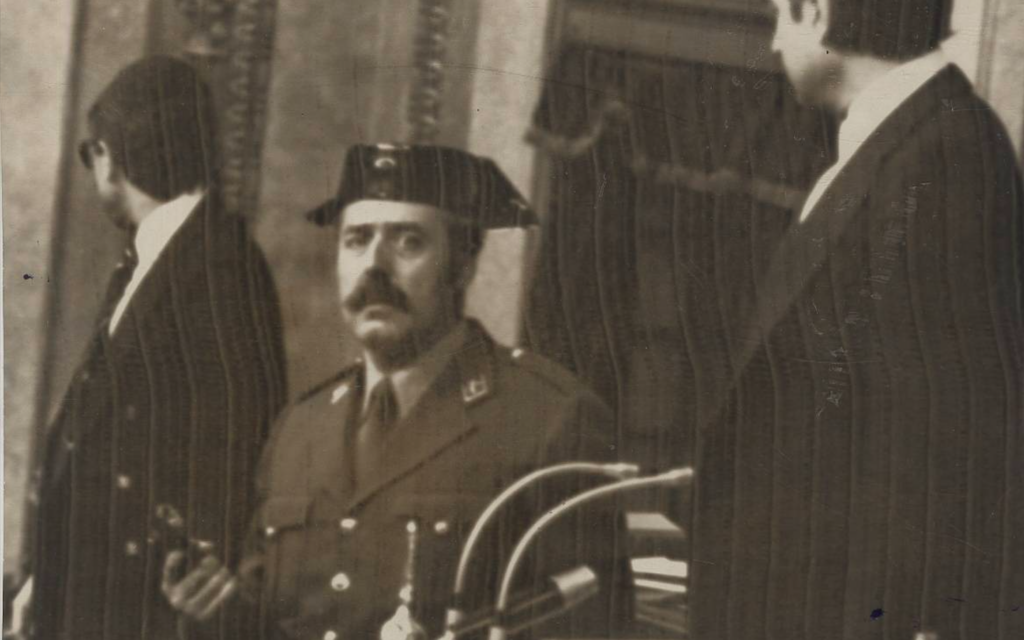
Antonio Tejero Molina, the infamous former Guardia Civil lieutenant colonel who spearheaded the 1981 armed seizure of the Spanish Parliament – a day etched in Spain's modern history as 23-F – has passed away at the age of 93. News of his death broke on February 25th, a date that now carries even more significance.
Why more significance, you ask? Well, that very same day, the Spanish government decided to release a trove of previously classified documents directly related to that very failed coup attempt. Talk about timing. Tejero's family confirmed his passing, but the timing of the document release is undeniably adding fuel to the fire of historical debate.
For those who might not remember or weren't even born yet, Tejero's attempted coup sent shockwaves across Spain and far beyond. It ignited very real fears of a descent back into authoritarian rule after Spain had only just begun to emerge from the long shadow of Francisco Franco's dictatorship. The entire country held its breath. The standoff ultimately crumbled due to a lack of widespread support within the military, largely thanks to the absolutely critical, televised intervention by King Juan Carlos I. He, in no uncertain terms, reaffirmed his unwavering commitment to the Constitution and democratic principles.
Following the coup's disastrous failure, Tejero, along with other key players, was brought to justice in 1982. Military courts convicted him of military rebellion and slapped him with a 30-year prison sentence. He was also formally dismissed from the Guardia Civil, his career in tatters. It's a stark reminder of the consequences of betraying democratic ideals.
Years later, health problems complicated Tejero's confinement. He was granted a more relaxed "third-degree" prison status in 1993 and ultimately released on conditional liberty in 1996 after serving approximately 15 years behind bars. In the decades that followed, his public profile faded considerably, though he remained a figure of morbid fascination, a symbol for those clinging to nostalgia for the pre-transition era. His appearances became more infrequent, his influence waned.
In his later years, Tejero battled health issues and reportedly resided near his family. This undoubtedly contributed to his reduced visibility in Spanish public life. It’s a far cry from the man who held parliament hostage.
Historians see the 23-F coup attempt as a baptism by fire for Spain's fledgling democratic institutions in the early 1980s. The crisis exposed the fragility of the country's democratic transition, but ultimately, it served to strengthen constitutional order and civilian control over the military. Tejero's name will forever be associated with this perilous moment, a potent reminder of the dangers that can threaten democratic governance.
With Tejero's death, the last of the main military figures directly involved in the 23-F events has now passed on. Other key participants, such as generals Jaime Milans del Bosch and Alfonso Armada, died some time ago. It truly marks the end of an era.
The release of these declassified government documents in the wake of Tejero's death adds a particularly poignant and, frankly, unsettling historical footnote to his legacy. These archives promise to offer scholars and the public unprecedented access to internal records from Spanish ministries related to the 1981 events, hopefully shedding more light on one of the most chaotic and uncertain periods in Spain’s post-dictatorship history. The timing is definitely something to consider.
Comments
Please sign in with Google to post a comment
No comments yet. Be the first to comment!