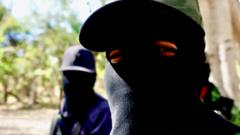
Culiacán, Mexico, once known for its vibrant culture, is now a city living under a constant shadow of fear. The BBC recently reported from the ground, painting a grim picture of escalating violence fueled by a brutal power struggle within the infamous Sinaloa cartel.
Mexico War Zone: Cartel Feud Turns City Into 'No-G...
The recent surge in bloodshed, according to sources, stems from the death of Nemesio Oseguera Cervantes, alias "El Mencho." While President Andrés Manuel López Obrador lauded the special forces for allegedly "bringing down" Oseguera, the reality on the ground, as the BBC's Quentin Sommerville reports, is far more complex. The removal of a major cartel figure rarely brings peace; instead, it often creates a vacuum, unleashing a new wave of violence as rival factions scramble for control.
Warning: The following contains graphic descriptions of cartel violence that some readers may find disturbing.
"The fear is everywhere, and the fear is constant," these words, spoken by Héctor Torres, a 53-year-old paramedic in Culiacán, resonate with a chilling truth. He spoke from the front seat of his ambulance, fresh from a shooting at a downtown garage. The scene: a business owner lying dead in his office, a crimson pool staining the white tile floor. His wife, arriving moments later, collapsed in grief, the paramedics helpless. This, sadly, is becoming the new normal.
For the past 18 months, the Sinaloa cartel has been tearing itself apart. Internal conflict, sparked by betrayal, and further destabilized by the imprisonment of Ismael "El Mayo" Zambada in the U.S., has transformed the region into a war zone. The escalating violence serves as a stark warning of the immense challenges facing Mexico in its battle against organized crime.
Héctor, a veteran of countless emergencies, says the intensity and duration of the violence in Culiacán are unprecedented. Last year, their call volume jumped by a staggering 70%. During one week documented by the BBC, nearly every call ended with a body, a scene of devastation, and grieving relatives left with unanswered questions. It's hard to imagine the psychological toll this takes on first responders like Héctor and his colleague, Julio César Vega, 28.
The cartel's ruthlessness knows no bounds. Schools, hospitals, even funerals have been targeted. Their operations have expanded into a billion-dollar enterprise, fueled by the production and trafficking of the deadly drug fentanyl. This poison is flooding U.S. streets, contributing to tens of thousands of overdose deaths. The human cost is immeasurable.
Former U.S. President Donald Trump, recognizing the severity of the situation, designated the cartel as a terrorist organization and even labeled fentanyl a weapon of mass destruction. He threatened direct military intervention if Mexico failed to curb the drug trade. While the rhetoric may have been strong, the underlying problem remains deeply entrenched.
Héctor and Julio now wear 14kg body armor – a grim necessity. "We don't know if the attackers are still at the scene or if they've already disappeared," Julio explained. "We risk being caught in the crossfire and getting injured." Just another day on the job in a city held hostage by fear.
Comments
Please sign in with Google to post a comment
No comments yet. Be the first to comment!