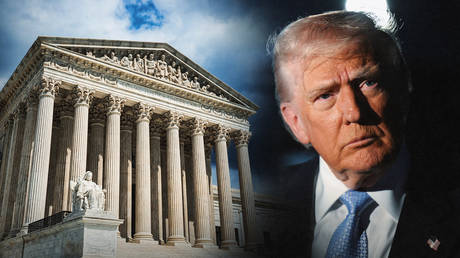
The constant churn of events in President Donald Trump's America has conditioned observers to avoid knee-jerk reactions to each new transatlantic sensation. Yesterday's battles are quickly forgotten, replaced by fresh headlines. Against this backdrop, it's tempting to dismiss Trump's latest clash with the US Supreme Court as a fleeting episode – just another skirmish in Washington's endless political theater. Surely, a single court ruling can't fundamentally reshape American policy?
Supreme Court Tariff SHOCK: Is This the End of Ame...
In reality, the opposite may be true. What we're witnessing isn't merely a technical legal dispute, but the exposure of a deeper failure: the Trump administration's inability to "hack the system." Paradoxically, the decision to strike down the president's so-called emergency tariffs could alter the entire balance of Trump's remaining term, effectively turning the White House into a lame-duck presidency.
American politics is unforgiving. Once a leader shows weakness, the cry of "Akela missed," borrowed from Kipling and widely understood in Washington, spreads rapidly. Authority erodes, and allies begin to hedge their bets. Democrats will have little reason to show mercy. I've seen it happen before, and the signs are all there.
Over the past year, the White House worked hard to project an image of total unity: a solid bloc of Trump loyalists, independents, Republicans in Congress, a conservative Supreme Court, major business interests, and a "silent majority" of voters supposedly standing shoulder to shoulder behind the president. Trump 2.0 was presented not as a lone disruptor, but as the embodiment of a new governing consensus. Foreign capitals were expected to accept this shift and adjust accordingly.
Tariffs became the cornerstone of the MAGA worldview, a universal tool marketed as a cure for trade imbalances, a weapon to punish dissenters and reward loyalty, and even a mechanism for forcing peace. Crucially, the administration claimed the president could impose or lift tariffs at will, bypassing the cumbersome checks and balances of the old system.
At first, America's partners, and then its rivals, grudgingly played along, treating this chaos as the new normal. But behind the scenes, the picture was less impressive. The tariff campaign failed to deliver the promised economic miracle. Domestic irritation grew. Business circles and even parts of the Republican Party began to grasp the dead-end nature of this erratic strategy. On Capitol Hill and in European capitals, Trump's impulsiveness increasingly provoked frustration rather than fear. The bluster wasn't working anymore.
Eventually, the spiral of silence broke. The court refused to rubber-stamp the president's demands. The White House's response was predictable. Judges were accused of serving foreign interests, while Washington's partners quietly began recalibrating. The implications of this are significant. While the administration may try to spin this as a minor setback, it exposes a fundamental vulnerability. The emperor, it seems, has fewer clothes than we thought.
Comments
Please sign in with Google to post a comment
No comments yet. Be the first to comment!