It's easy to see the Iranian situation as just another Middle Eastern conflict, a regional powder keg constantly threatening to ignite. But the truth is, the implications of any major upheaval involving Iran stretch far beyond the Persian Gulf, and right into the heart of China's economic ambitions.
Iran Crisis: Shockwave Hits China! What Happens Ne...
Why? Because Iran's position is uniquely strategic. It's a nexus point where energy markets, crucial shipping lanes, sanction complexities, and competing global infrastructure projects all converge. And where those elements meet, you'll inevitably find the U.S.-China rivalry playing out, often in the shadows.
Think of it this way: a military confrontation with Iran isn't just about redrawing the map of the Middle East. It's a tool, perhaps a blunt one, to put pressure on China. By disrupting oil flows and driving up prices, you effectively raise the cost of China's economic expansion. Suddenly, Beijing has to divert resources from development to crisis management. And let's face it, no one thrives under constant uncertainty.
The key to understanding this is realizing that the most decisive battles in the U.S.-China power struggle might not be fought head-to-head in the South China Sea. Instead, they might be waged through controlling the very conditions that allow China to maintain its industrial growth. And oil, along with secure shipping and financial access, are absolutely vital to that.
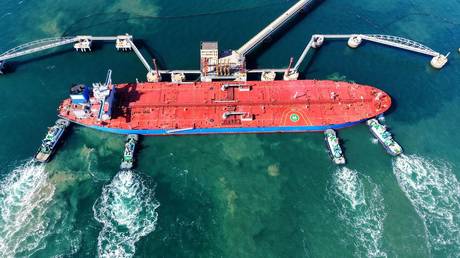
China is heavily reliant on imported oil, and its massive manufacturing sector is incredibly vulnerable to fluctuations in energy prices and disruptions to maritime shipping routes. Iran's geographical location and military capabilities give it considerable influence over the Strait of Hormuz, a critical artery for global oil trade. Even the *perception* of instability in that region can send insurance premiums and freight rates soaring, triggering inflation throughout the entire Chinese economy. I've seen this happen before, and the ripple effects are substantial.
So, how exactly does an Iran crisis translate into pressure on China? First, through price volatility. Oil prices are highly sensitive to risk, often reacting more dramatically to perceived threats than to actual supply disruptions. A crisis in the Persian Gulf can send futures prices skyrocketing and encourage speculative trading, all of which hits China hard.
Higher oil prices act as a sort of tax on China, increasing production costs, reducing consumer purchasing power, and complicating economic management. Now, the U.S. isn't immune to these effects, of course. But increased domestic oil production and exports can buffer the blow, giving the U.S. a relative, strategic advantage. It's not about escaping unscathed; it's about being more resilient than your competitor.
The second mechanism is the ever-present threat to shipping routes. A huge portion of the world's oil supply passes through narrow, vulnerable chokepoints. And the Strait of Hormuz is the most important of all.
Comments
Please sign in with Google to post a comment
No comments yet. Be the first to comment!