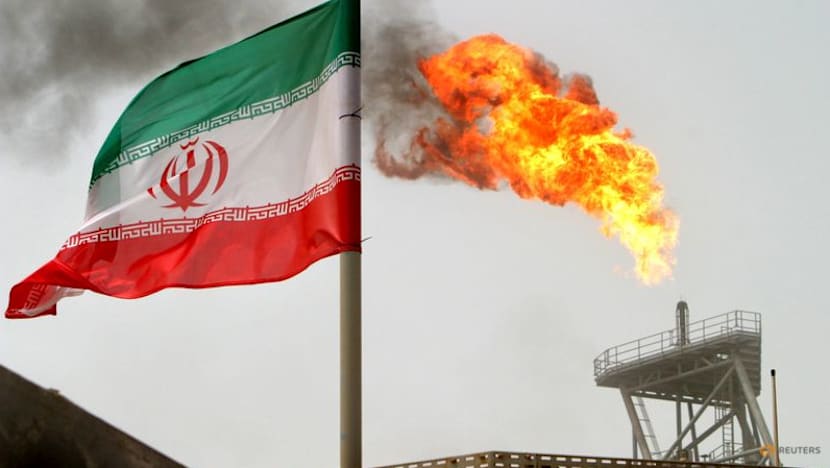
Iran is reportedly on the verge of securing a deal with China to purchase advanced anti-ship cruise missiles, a move that could dramatically shift the balance of power in the Persian Gulf and raise serious concerns for the U.S. Navy, according to multiple sources familiar with the negotiations.
Iran's SHOCK China Missile Deal: What Will This Me...
The agreement, centered around the Chinese-made CM-302 missiles, is said to be nearing completion, though details regarding delivery timelines remain unclear. Think about it – this isn't just another arms deal; it's a potential game-changer. We’re talking about supersonic missiles that could make any naval operation in the region significantly more perilous.
Interestingly, these negotiations, ongoing for at least two years, reportedly gained momentum following the recent conflict between Israel and Iran, say sources. The timing suggests a clear message, perhaps a response to perceived escalations in the region. "It's a complete game-changer if Iran has supersonic capability to attack ships in the area," Danny Citrinowicz, a former Israeli intelligence officer, told Reuters. He emphasizes that these missiles are very difficult to intercept.
While Reuters has been unable to independently verify specifics like the exact number of missiles involved or the agreed price, the potential implications are undeniable. An Iranian foreign ministry official vaguely alluded to leveraging existing military and security agreements with allies, a subtle nod towards China's involvement.
Unsurprisingly, neither the Chinese Foreign Ministry nor Defense Ministry responded to requests for comment, which is pretty standard procedure in situations like this. The White House also remained tight-lipped, opting not to directly address the negotiations. It's the kind of silence that speaks volumes, isn't it?
The acquisition of these missiles would mark a significant upgrade in Iran's military capabilities, representing some of the most advanced hardware China has transferred to the country. This raises questions about potential violations of a UN weapons embargo, initially imposed in 2006 and later partially lifted before being reimposed last September. It undeniably underscores the deepening military ties between China and Iran. It also hints at China's increasing willingness to project its influence in a region long considered a US stronghold.
Add to this the annual joint naval exercises conducted by China, Iran, and Russia, and you've got a clear picture of a growing strategic alignment. The situation is further complicated by past US sanctions against Chinese entities accused of supplying chemical precursors to Iran's Islamic Revolutionary Guard Corps for use in ballistic missiles. China, of course, denies these allegations. One thing is clear: this situation is far from simple, and the implications could be profound.
Comments
Please sign in with Google to post a comment
No comments yet. Be the first to comment!