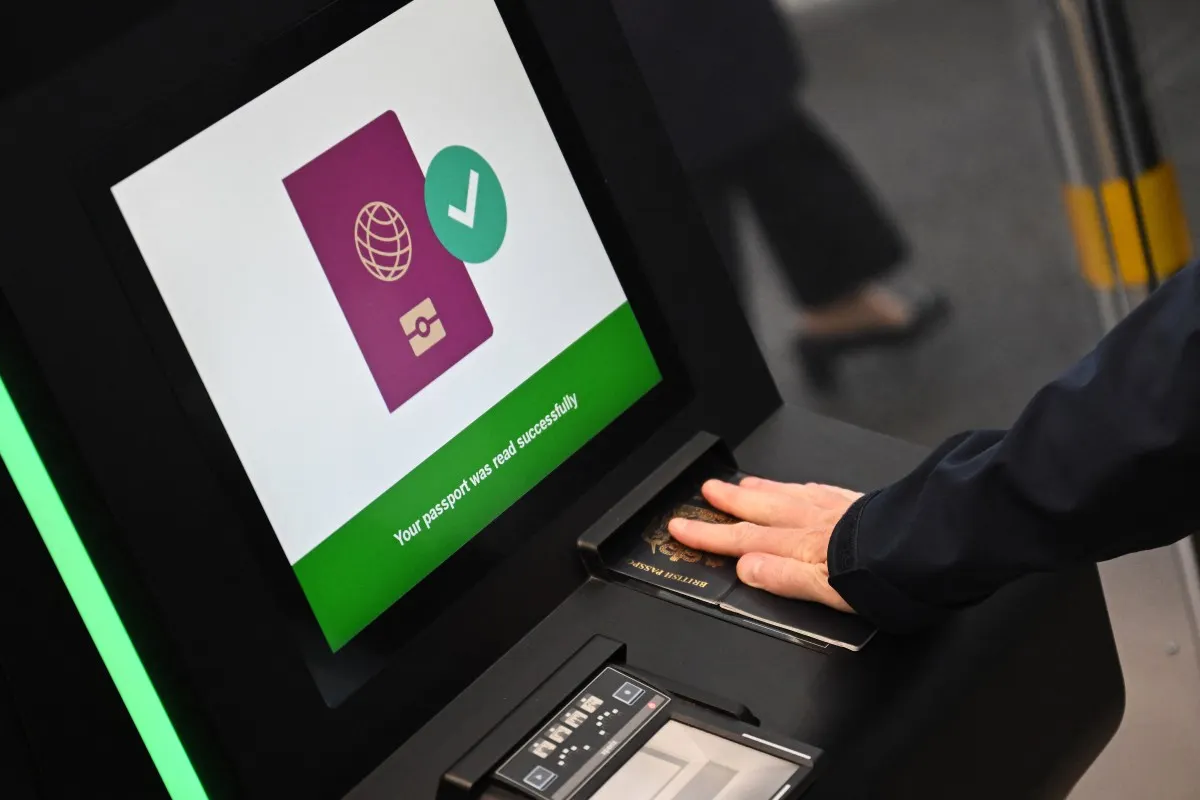
The European Union's new Entry/Exit System (EES), designed to track travelers entering and leaving the Schengen Area, seems to be doing exactly what it promised. An EU official has revealed that in its first four months of operation, the biometric passport checks have flagged approximately 4,000 individuals who had overstayed their permitted 90-day limit.
EU's New Passport Tech SHOCK! 4,000 Caught – What ...
Now, 4,000 might not sound like a staggering number when you consider the millions of people traversing European borders every month. But, it’s a crucial datapoint. It highlights the system's effectiveness in identifying and recording over-stayers, a key objective of the EES. Before this, tracking individuals who remained in the Schengen Area beyond their visa or visa-free allowance was a notoriously difficult process, often relying on manual checks and, frankly, a bit of luck.
The EES, if you're not familiar, replaces the manual stamping of passports with an automated system that registers the traveler's name, type of travel document, biometric data (fingerprints and facial images), and the date and place of entry and exit. This digital record-keeping makes it significantly easier for authorities to monitor entries and exits, and to quickly identify individuals who have exceeded their allowed stay.
It's important to remember that the EES rollout hasn't been without its hiccups. There were initial concerns about potential delays at border crossings, particularly at busy airports and land borders. I remember reading reports about long queues and frustrated travelers shortly after the system was implemented. However, it appears that these teething problems are gradually being ironed out as border staff become more familiar with the technology and processes.
The implications of catching these over-stayers are multifaceted. For the EU, it's about maintaining border security and ensuring compliance with immigration regulations. It's also about demonstrating to member states and the wider public that the EES is a worthwhile investment. On an individual level, of course, overstaying can have serious consequences, ranging from fines and deportation to potential bans on future travel to the Schengen Area. So, while the EES might feel like an added layer of bureaucracy to some, it serves as a stark reminder that immigration rules are there for a reason, and that they are now being enforced with greater efficiency.
Looking ahead, it will be interesting to see how these numbers evolve. Will the initial spike in identified over-stayers level off as people become more aware of the EES and its capabilities? Or will the system continue to uncover a steady stream of individuals attempting to bend the rules? Only time will tell. But one thing is clear: the EU's border control mechanisms have just become a whole lot sharper.
Comments
Please sign in with Google to post a comment
No comments yet. Be the first to comment!