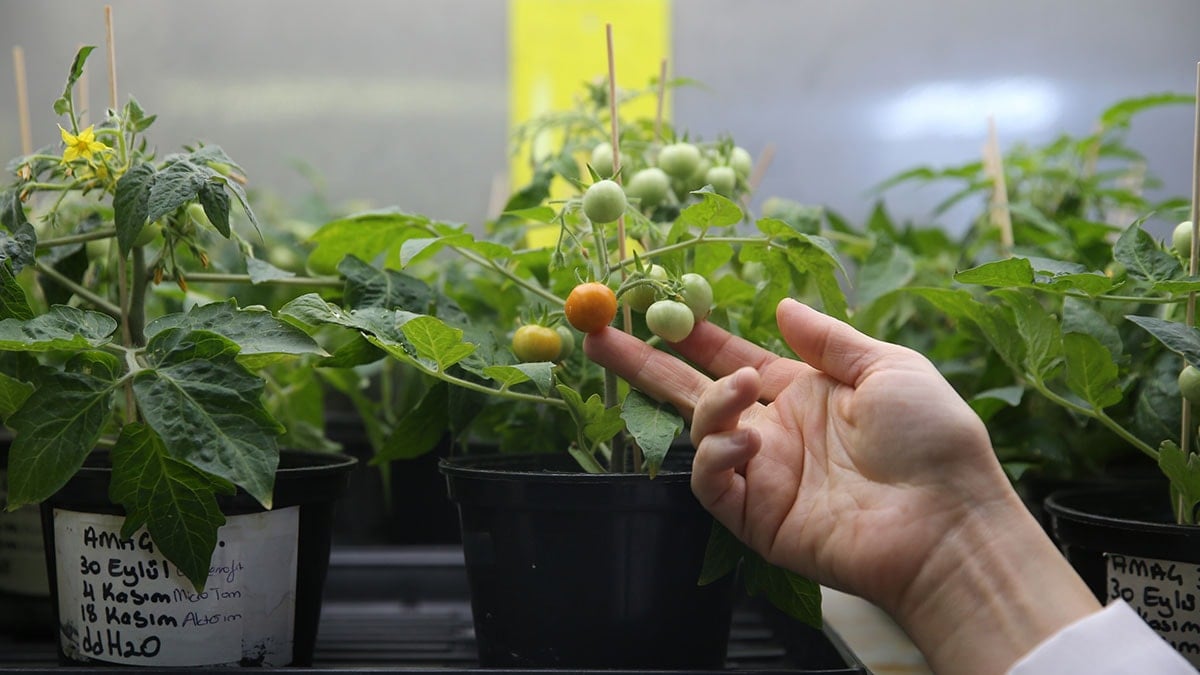
In a potentially giant leap for future off-world settlements, Turkish scientists have successfully grown tomatoes in simulated Lunar and Martian soil. This breakthrough at Ege University in Turkey offers real hope for establishing sustainable agriculture on the Moon and Mars. As someone who's always been fascinated by space exploration, this feels like a story straight out of science fiction, but it's very much grounded in scientific reality.
Scientists Grow Tomatoes on MOON & MARS Soil?! Wha...
The project, spearheaded by Professor Rengin Özgür Uzilday from Ege University's Department of Biology, was supported by TÜBİTAK, Turkey's leading science and technology research council. They used regolith simulants – essentially, artificial versions of Lunar and Martian soil – sourced from the United States. These simulants mimic the chemical and physical composition of the real stuff, allowing researchers to conduct experiments here on Earth without the immense cost and logistical challenges of retrieving actual samples from space.
The 15-month study, which also involved Associate Professor Barış Uzilday and Dr. Tansel Kaygısız, focused on making these initially inhospitable simulants suitable for growing crops. Their project, aptly titled "Making Lunar and Martian Regolith Simulants Suitable for Agriculture by Using Extremophyte Pioneer Plants and Investigating Stress-Related Signal Pathways in Plants Grown in Regolith Simulants," is a testament to the meticulous and detailed approach needed for such ambitious endeavors.
The initial phase involved cultivating extremophytes – hardy plants like *schrenkiella parvula*, *arabis alpina* (rockcress), and *noccaea sempervivum*. These plants are naturally adapted to survive in extreme environments – think high temperatures, heavy metal contamination, and excessive salt. By growing these "pioneer" species, the researchers were able to bioremediate the regolith, effectively cleaning it up by reducing the levels of harmful metals and salts. It's like using nature's own cleanup crew!
Associate Professor Uzilday emphasized the significance of space biology research, noting the growing ambition to build colonies on the Moon and Mars. While acknowledging the difficulties of growing plants in microgravity, she highlighted the immense potential of regolith-based agriculture. Think about it: transporting tons of Earth soil to another planet is simply not practical. Regolith, though lacking the organic matter and biological activity of Earth soil, is abundant on these celestial bodies. Finding a way to make it fertile is critical for long-term sustainability.
And that's where the tomatoes come in. After the initial bioremediation, the team successfully cultivated tomatoes in the treated regolith simulants. Professor Uzilday reported "significant fruit yields" in some cases. Further research will focus on analyzing the quality of the fruit and understanding the molecular mechanisms at play within the plants. Dr. Kaygısız added that rigorous quality analyses would be conducted on the harvested fruit, comparing them to tomatoes grown in traditional Earth soil. This will be vital in assessing the edibility and nutritional value of the space-grown produce. It will be interesting to see how these space tomatoes compare to the ones from my garden!
Comments
Please sign in with Google to post a comment
No comments yet. Be the first to comment!