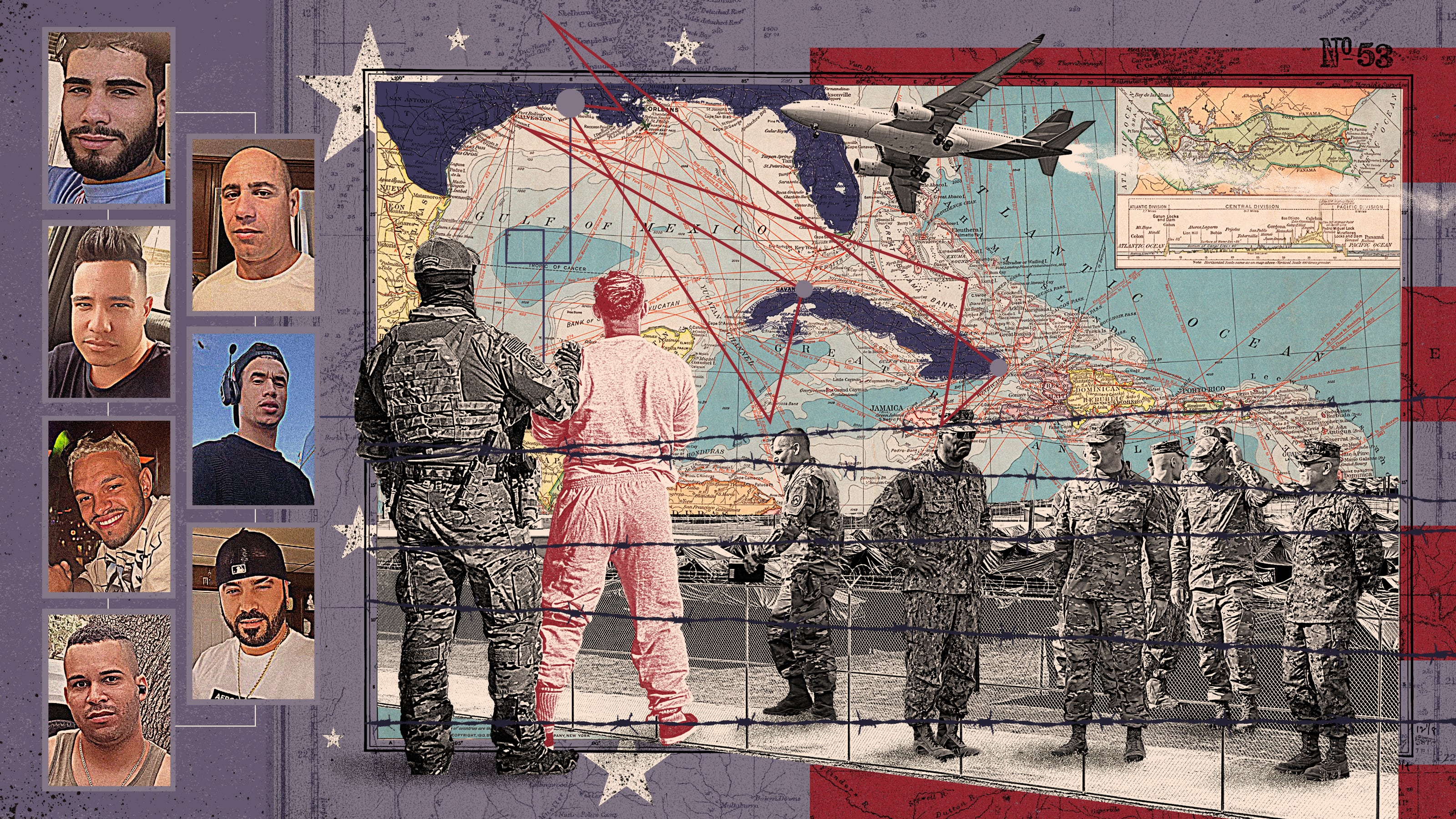
A chilling story is emerging from Guantánamo Bay, one that speaks to bureaucratic blunders and the precarious situation of migrants in the United States. Imagine thinking you're finally headed home, only to find yourself in a place far more complicated and controversial than you ever anticipated. That's the reality for over 50 Cuban migrants who were mistakenly deported to the U.S. naval base late last year.
First Cubans Deported to Guantánamo: What Happens ...
According to reports pieced together by EL PAÍS, these migrants, detained in Louisiana, boarded an ICE charter flight on December 14th, 2025, fully expecting to land in Havana. The reality, however, was a stark departure from their expectations. They touched down at Guantánamo Bay, a U.S. military installation that has been a source of friction between the two countries for decades. It's a strange irony; the U.S. still technically pays Cuba a yearly lease for the land, a payment the Cuban government pointedly refuses to accept.
Clad in those instantly recognizable gray prison uniforms, the migrants were reportedly ushered onto the plane with promises of repatriation. The confusion and anxiety must have been palpable when they realized they were still on U.S. soil, just a particularly isolated and infamous corner of it. It begs the question: How could such a monumental error occur?
What's perhaps even more troubling is the context surrounding this incident. Guantánamo hadn't housed migrants since a federal judge pushed back against the Trump administration's policy of detaining them on military bases. But, apparently, President Trump, just nine days into his return to the White House in 2025, authorized millions in funding to revamp the base, aiming to house up to 30,000 "criminal aliens" – a loaded term if ever there was one – fulfilling a campaign promise of mass deportations. It seems these Cubans became unfortunate pawns in a larger political game.
The lack of communication following the deportation compounded the families' distress. Imagine being in Cuba or the U.S., desperately trying to reach your loved one, only to be met with silence. Eventually, some detainees managed to make brief, hurried phone calls. The exchanges were heartbreaking: "Are you in Guantánamo?" one mother desperately asked her son. "Auntie, they only gave me three minutes, and I want you to know I’m in Guantánamo," another detainee managed to convey.
Life inside Guantánamo, according to reports, is far from comfortable. Detainees describe being confined to bunkers, subsisting on a diet of potatoes and peas, and having access to a mere 15 minutes of phone time every other day, while handcuffed, and only minimal sunlight. This is hardly the image of justice and due process we like to project.
Unsurprisingly, the situation has ignited outrage. One Cuban mother expressed the raw, visceral desire to personally go to Guantánamo and bring her son home. It's a powerful image, and a potent reminder of the human cost of political decisions and administrative errors. This is a story that demands further scrutiny and accountability. The odyssey of these Cuban migrants is far from over.
Comments
Please sign in with Google to post a comment
No comments yet. Be the first to comment!