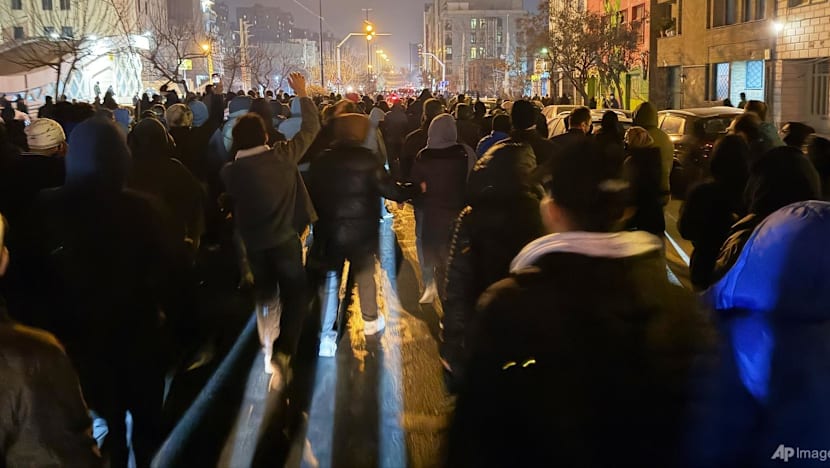
Tensions are simmering in Iran, with fresh anti-government protests erupting amid escalating threats from the United States. Videos circulating online, geolocated to Tehran's prestigious engineering university, show demonstrators chanting "bi sharaf" – Farsi for "disgraceful" – a clear sign of growing discontent.
Iran on Brink?! Student Uprising Erupts Amid US Th...
These latest demonstrations are a continuation of unrest that initially flared up last December, fueled by economic hardship. What began as protests against the rising cost of living quickly morphed into a broader anti-government movement. We all remember those images – the sheer scale of the demonstrations was striking.
The government's response has been heavy-handed, to say the least. The peak of the violence on January 8th and 9th saw a brutal crackdown by security forces. While Iranian authorities acknowledge over 3,000 deaths, attributing the violence to "terrorist acts" incited by foreign adversaries, the US-based Human Rights Activists News Agency (HRANA) paints a far grimmer picture, reporting over 7,000 killings, primarily protesters. The real number, tragically, may be even higher. It's a situation that's incredibly difficult to get accurate information from.
Initially, Tehran attempted to acknowledge the legitimacy of the protesters' economic concerns. However, as the demonstrations became increasingly anti-government, the tone shifted. The regime began accusing the United States and Israel of orchestrating "riots," a familiar tactic used to deflect blame and delegitimize dissent.
According to Fars news agency, a "silent and peaceful sit-in" held by students on Saturday to commemorate those killed in the earlier crackdown was disrupted by individuals chanting slogans like "death to the dictator" – a direct jab at Iran's supreme leader. A video released by Fars shows a group chanting and waving Iranian flags confronting a crowd wearing masks, with men in suits attempting to keep them separated. It's a chaotic scene, indicative of the deep divisions within Iranian society.
Adding fuel to the fire are increasingly bellicose statements from former U.S. President Trump, who has warned of potential "bad things" if Tehran fails to reach a deal, setting an ultimatum of just 15 days. This kind of rhetoric, while familiar, only serves to escalate tensions and further destabilize the region.
The heightened threat of conflict has prompted several nations, including Sweden, Serbia, Poland, and Australia, to urge their citizens to leave Iran. Australia, in particular, warned that "commercial flights are currently available, but this could change quickly," highlighting the urgency of the situation. Remember last year? The previous round of nuclear diplomacy was derailed by an Israeli bombing campaign, followed by U.S. strikes on nuclear facilities before a ceasefire. The possibility of a repeat scenario is very real.
Iran, for its part, has reiterated its right to defend itself against any future attacks. President Masoud Pezeshkian, speaking to athletes and broadcast on state television, declared that the country would "not yield to any trial, even if the powers of the world stand against us with injustice and try to force us into submission." The situation is volatile, and the coming weeks will be crucial in determining whether diplomacy can prevail or if the region is headed for further conflict.
Comments
Please sign in with Google to post a comment
No comments yet. Be the first to comment!