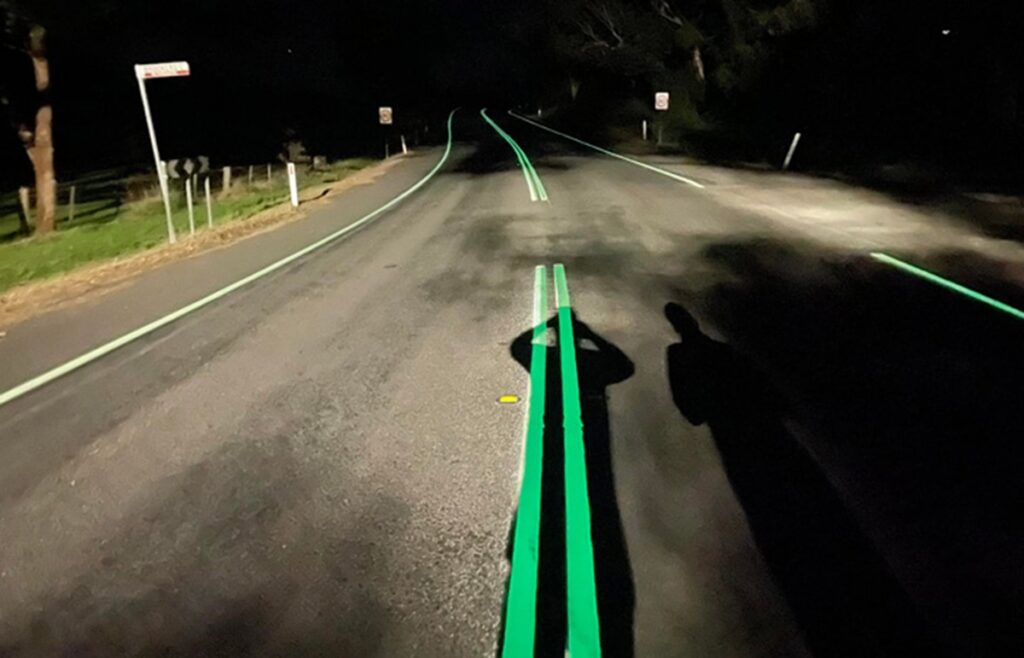
Goodbye white lines? The glowing road experiment drivers are talking about. Could glowing road lines be the future of safer night driving? A small but eye-catching experiment is underway to test fluorescent road markings designed to improve visibility in dark conditions.
Glowing Roads?! This Experiment Could Change Drivi...
By Farah Mokrani • Published: 21 Feb 2026 • 13:16 • 3 minutes read
Imagine navigating a poorly lit rural road at night. The center line fades, reflections are poor, and you're heavily reliant on headlights and instinct. We've all been there, right? That feeling of white-knuckle driving, hoping you're staying within your lane. A new road experiment aims to address this challenge, not with smarter cars and fancy sensors, but with something surprisingly simple: road lines that subtly glow after sunset.
The concept is pretty straightforward. The paint absorbs sunlight during the day, and then releases a gentle, almost ethereal glow at night, enhancing visibility without being overly bright or distracting. Think of it like a subtle nightlight for the road. Drivers who tested the glowing lines reported a noticeable improvement, especially on those stretches of road where street lighting is either non-existent or patchy at best. The consistent glow made the lines much easier to follow, making night driving feel just a little less like a gamble. Even better, it seems to hold up reasonably well in rainy conditions, which, let's be honest, is a constant battle with traditional road markings. We've all seen those nights where painted lines practically disappear under the rain.
The experiment is focusing specifically on secondary and rural routes. You know the ones – narrow lanes, inconsistent lighting, and a constant need to pay extra attention. On these roads, losing sight of the dividing line can easily lead to drivers drifting closer to oncoming traffic, significantly increasing the risk of accidents. A consistently visible line, even a subtly glowing one, could potentially reduce this uncertainty and provide a crucial visual aid.
The idea isn't entirely new, of course. Other countries have been tinkering with similar concepts. I recall reading about projects in Australia and the Netherlands, where they've experimented with glow-based markings in various settings, including cycle lanes and pedestrian areas. It seems the potential applications are pretty broad.
The big question, as always, comes down to cost. While traditional white paint is cost-effective and relatively easy to apply, these fluorescent alternatives are significantly more expensive. That makes widespread, across-the-board adoption unlikely, at least in the short term. More realistically, glowing lines may become a targeted solution, deployed strategically in areas where they can have the biggest impact, rather than a universal replacement for all road markings.
Interestingly, Spain is already quite proactive in using visual design to enhance road safety. I’ve seen examples of "dragon's teeth," those triangular markings that make lanes appear narrower, subtly encouraging drivers to slow down. And zigzag lines near crossings also serve a similar purpose, prompting extra caution. These measures demonstrate how even small visual changes can influence driver behavior without requiring major infrastructure overhauls. It's all about nudging drivers to be more aware and attentive.
For now, glowing road lines remain an intriguing experiment, a fascinating glimpse into the future of road safety. However, the concept as a whole highlights a crucial point: even the simplest and most taken-for-granted aspects of road design are constantly evolving, driven by the ongoing quest to make our roads safer for everyone.
Comments
Please sign in with Google to post a comment
No comments yet. Be the first to comment!