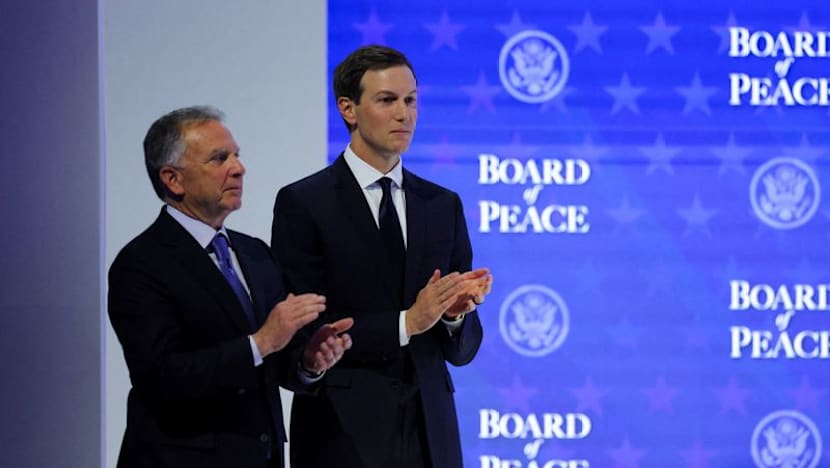
BIRMINGHAM, England – The week culminating in the inaugural meeting of Donald Trump's Board of Peace in Washington on February 19th was certainly a busy one for US diplomacy, though perhaps not in the way traditionalists might expect. Career diplomats, the folks you'd normally picture burning the midnight oil over treaties and tense negotiations, seem to have taken a backseat. Instead, a tight-knit circle of President Trump's personal envoys, including his former real estate business partner Steve Witkoff and son-in-law Jared Kushner, are calling the shots.
Trump's Peace Plan SHOCK: Is He Sabotaging Diploma...
Earlier that week, Witkoff and Kushner were reportedly hopping between negotiations in Geneva, Switzerland. First, indirect talks with Iran. Then, taking the lead in negotiations between Russia and Ukraine. And after all that, it was back to Washington for the Board of Peace meeting. Quite the whirlwind, really.
But let's be honest, the diplomatic track record of Witkoff and Kushner is… well, mixed. Kushner, of course, gets credit for his mediating role in the Abraham Accords during Trump's first term. The aim was to normalize relations between Israel and other Middle Eastern states. But has it really generated sustainable momentum for regional peace? The jury's still very much out.
Witkoff, on the other hand, has been lauded for mediating the January 2025 ceasefire between Israel and Hamas, as well as the Gaza peace plan later that year. This plan, endorsed by the UN Security Council, ultimately paved the way for Trump's Board of Peace. You have to give him credit for that.
Both men have also been deeply involved in trying to end Russia's war against Ukraine. Witkoff has been at it since the beginning of Trump's second term, with Kushner jumping in more recently towards the end of 2025. However, it seems that even Kushner's involvement, along with a greater focus on parallel negotiations between Washington and Moscow (mostly centered on the idea of mutual economic benefits of peace between Russia and Ukraine), hasn't really moved the needle. The warring parties remain stubbornly far apart.
The prominence of Witkoff and Kushner in US diplomacy, despite their, shall we say, uneven successes, really shines a light on a fundamental misunderstanding of peacemaking within the Trump administration. I mean, let's face it, these guys aren't exactly Henry Kissinger.
Peace deals are usually incredibly complex. You need mediators and support teams with serious expertise – deep knowledge of the conflict, a solid grasp of the technical issues, and, crucially, an understanding of the root causes and incentives. It's not just about slapping a deal on the table; it's about understanding the players and the game.
And while dangling economic carrots – promising development in exchange for peace – is important, you also need to remember that warring parties often have symbolic and psychological needs that need to be addressed for any agreement to last. It's not just about money; it's about dignity, respect, and a sense of justice.
These considerations are particularly crucial when we're talking about the war in Ukraine. Ukrainian President Volodymyr Zelensky has repeatedly made it clear that...
Comments
Please sign in with Google to post a comment
No comments yet. Be the first to comment!