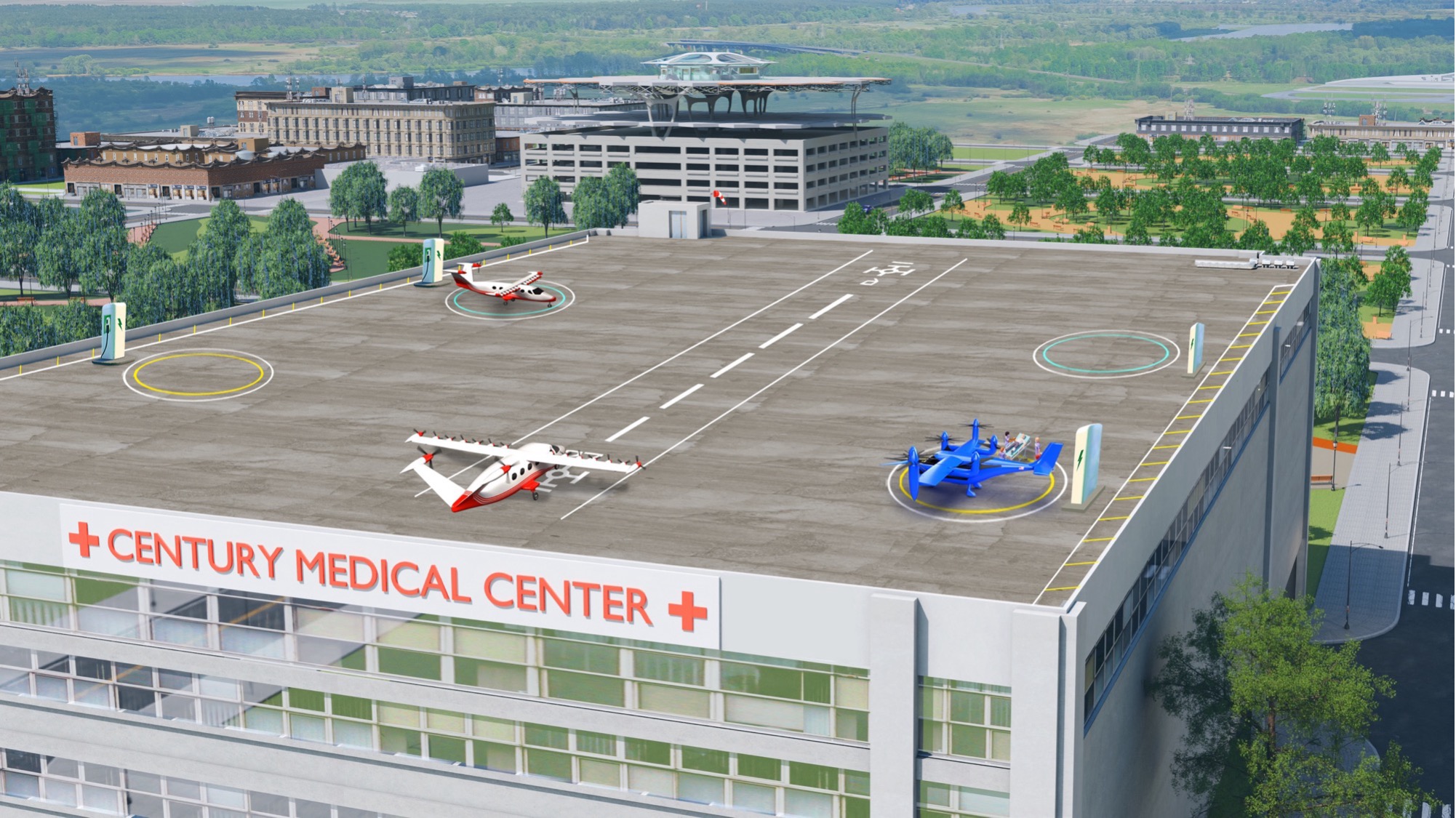
Air taxis are on the horizon, and with them, a whole new soundscape. But how will we react to these whirring, buzzing, and potentially disruptive additions to our skies? NASA is trying to figure that out, and early results suggest your tolerance might depend on where you live. Let's dive in.
NASA's Air Taxi Noise Study: What They Just Discov...
NASA's been hard at work developing new air transportation options, envisioning a future where we can hop between cities or even across town in these futuristic vehicles. Of course, integrating these new technologies into our communities requires careful consideration, and one crucial aspect is noise. After all, nobody wants to live under a constant barrage of aerial traffic sounds.
The agency's latest study, known as VANGARD (Varied Advanced Air Mobility Noise and Geographic Area Response Difference), specifically explored public reaction to air taxi noise. Think of Air taxis as the Ubers of the sky – short-distance passenger transport ranging from personal commutes to emergency medical services. The central question: would city dwellers, already accustomed to a symphony of sirens and traffic, react differently than those in quieter suburban locales?
The study, conducted in late August and September of 2023 (yes, 2025 as stated in the original text seems a bit premature!), involved 359 participants from the bustling metropolises of Los Angeles, New York City, and Dallas-Fort Worth. They were subjected to 67 distinct sounds simulating various aircraft, including some cutting-edge designs from NASA's own stable. Interestingly, to avoid any bias, the team kept the aircraft manufacturer names under wraps and didn't even show participants pictures of the vehicles. Smart move, I think.
Initial findings point to a fascinating trend: people in noisy environments seemed more bothered by the air taxi sounds compared to their counterparts in quieter areas. The VANGARD team is now knee-deep in data analysis, trying to unpack this observation. One leading hypothesis is that residents of already loud environments might simply be more sensitive to any additional noise pollution – perhaps a form of auditory overload.
"With air taxis coming soon, we need to understand how people will react to a variety of future aircraft sounds," explained Sidd Krishnamurthy, the lead researcher at NASA’s Langley Research Center. "This test filled a critical gap, and its results will improve how we predict human reactions to noise, guiding the design and operation of future aircraft." It makes perfect sense. Understanding the human element is just as important as the technological advancements themselves.
Participants rated their annoyance levels after hearing individual aircraft flyover sounds. Their zip codes were also collected, enabling researchers to categorize their locations based on background noise levels. As Krishnamurthy noted, the goal was to determine if and how much the existing soundscape influenced people's reactions, even when their usual background noise was absent during the test.
The majority of participants listened from the comfort of their own homes, using their personal audio devices. To validate the at-home findings, a control group of 20 people participated in person at NASA Langley, using standardized tablets and headphones. Reassuringly, the control group's responses mirrored those of the at-home testers, lending credibility to the overall results. While the study didn't delve into every possible noise interaction, such as how high background noise might mask the air taxi sounds, it's clearly a crucial first step in preparing for the arrival of these new aerial neighbors.
Comments
Please sign in with Google to post a comment
No comments yet. Be the first to comment!