## Looking at Chlorophyll from Space: A Conversation with NASA's Jim Tucker
Field Notes REVEAL Shocking Discovery! What Does I...
NASA scientists are now routinely gazing down at Earth from orbit, studying plant life with a precision unimaginable just a few decades ago. It's a capability we almost take for granted now, but it wasn't always this way. I recently had the pleasure of speaking with Dr. Compton “Jim” Tucker, a senior scientist at NASA's Goddard Spaceflight Center, about his pivotal role in making this a reality. "I love using satellite data to study the Earth," he told me, his enthusiasm infectious.
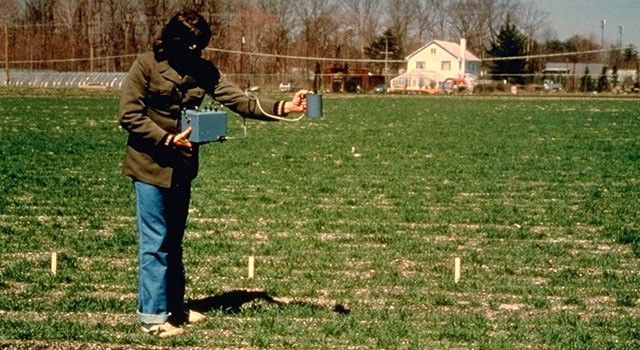
Tucker’s journey began with a rather humble handheld device, something he jokingly described as being "literally held together by masking tape and rubber bands." As a graduate student, he and his colleagues were pioneering a way to study photosynthesis, armed with ingenuity and a classmate's hand-built contraption. It's funny to think that such sophisticated science started so…well, DIY. But that's often how breakthroughs happen.
The critical insight stemmed from recognizing the deep connection between Chlorophyll, that vital green pigment in plants, and specific wavelengths of light. "We figured out that if you wanted to study photosynthesis you needed to study chlorophyll," Tucker explained simply. This led to the discovery that you could assess plant health by measuring how plants reflect visible and near-infrared light. This comparison became the Normalized Differentiated Vegetation Index (NDVI), “just a simple ratio of these two wavelengths or bands." It sounds simple now, but it was revolutionary then.
His passion for nature clearly fuels his work. He reminisced about his early explorations along the Pecos River in New Mexico, accompanied by a friend and his older brother. "He really helped to raise my awareness and my interest in the natural wonders of Earth. I really enjoy doing field work," Tucker shared. It's clear that these formative experiences shaped his scientific path. It is always good to have strong mentors in life.
This groundbreaking work wasn’t confined to terrestrial observations. In 1981, the first NDVI instrument made its way into space as part of the Advanced Very High Resolution Radiometer (AVHRR) mission. "It is the same instrument from my working-in-the-field days, literally, just bigger," Tucker remarked. That's quite an upgrade, from masking tape to orbit! Then, in 1983, Tucker met Piers Sellers, forging a lasting friendship and scientific partnership. Sellers found a way to scale Tucker's photosynthesis measurements, enabling detailed assessments of plant health on a global scale, from individual leaves to entire forests – all from the vantage point of space.
Even after decades of groundbreaking research, Tucker shows no signs of slowing down. When I asked about retirement, he responded with a chuckle: "I really like what I am doing. I am going to do it for as long as I can because it is fun. Most people look at me and think ‘Are you crazy?’ I am not. It is true: I really love my work." And that, I think, is the secret ingredient to a long and impactful career.
Comments
Please sign in with Google to post a comment
No comments yet. Be the first to comment!