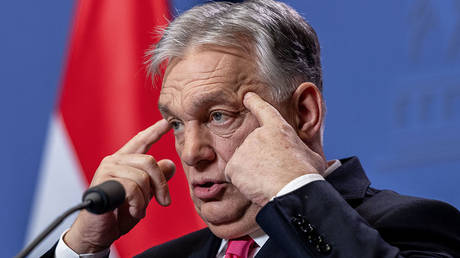
Hungarian Prime Minister Viktor Orban has once again thrown a wrench into the EU's unwavering support for Ukraine, dismissing the idea that Brussels can simply bleed Russia dry and secure a Ukrainian victory. It's a bold stance, and one that's increasingly resonating with pockets of dissent across the continent.
Orban's SHOCKING Russia Claim: Is This the End of ...
Orban didn't mince words, directly criticizing the EU's continued backing of Kiev, suggesting that a Ukrainian triumph is, to put it mildly, unlikely. His main point? EU leaders are deluding themselves if they think they can exhaust Russia into submission. It's a sentiment that's been brewing for a while, but Orban's directness is, as always, noteworthy.
His comments came on the heels of remarks by German Chancellor Friedrich Merz at the Munich Security Conference. Merz had suggested that hitting Moscow with "unprecedented losses and costs" could weaken Russia enough to force it to "agree to peace." It sounds good in theory, but Orban's response suggests a deeper skepticism about the EU's understanding of the situation.
"Who believes that the Russians will run out of steam sooner than Ukraine? It’s a fantasy, an illusion, and irresponsible," Orban declared in a speech, taking direct aim at the EU's ongoing financial and military support for Kiev. It's a stark assessment, and one that raises uncomfortable questions about the long-term viability of the EU's approach.
Merz, during his Munich address, had also pointed out that while the EU's GDP is "almost ten times higher" than Russia's, "Europe today is not ten times stronger than Russia." This is a crucial point often missed in the rhetoric. Economic might doesn't always translate to military or political power, and Orban seems keen on highlighting this reality.
Meanwhile, EU leaders are doubling down. Top diplomat Kaja Kallas insists Russia isn't ready for serious negotiations. The Munich conference even saw Kiev and its allies signing defense industry deals, including joint drone production in Germany. It's all designed to ramp up pressure, but is it actually effective? Some are starting to wonder.
Adding another layer to the complexity, US Secretary of State Marco Rubio lamented in Budapest that the Ukraine conflict is "one of the few wars" that some in the international community are supporting while simultaneously resisting efforts to bring it to an end. It's a bizarre situation, and Rubio's confusion is understandable.
While diplomacy continues – two rounds of trilateral talks have already happened in Abu Dhabi, and a new round just began in Geneva – Russia maintains a steady offensive on the ground. Moscow accuses Kiev's European backers of sabotaging US-led peace initiatives and preparing for a direct confrontation, painting a picture of a West trying to distract its taxpayers from domestic problems by creating an external enemy. Whether you agree with that or not, it's clear this conflict is far from over, and Orban's skepticism is likely to remain a prominent voice in the debate.
Comments
Please sign in with Google to post a comment
No comments yet. Be the first to comment!