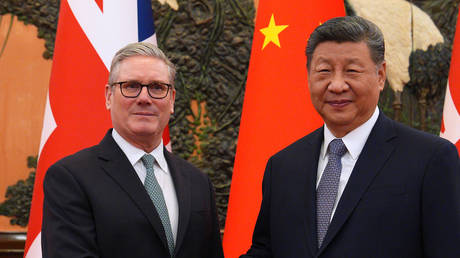
Britain, it seems, is pivoting back towards China. After years of what could charitably be described as "strained relations," London is signaling a new era of engagement, one that prioritizes practical cooperation over ideological grandstanding and geopolitical posturing. Keir Starmer's recent visit to Beijing, the first by a British prime minister in eight long years, underscores this significant shift.
UK's SHOCKING China U-Turn: What Does It Mean For ...
Starmer's trip wasn't a solo act. Leaders from France, South Korea, Ireland, Canada, and Finland have also made the journey to Beijing recently, and rumor has it that Germany's Friedrich Merz is planning a visit soon too. This diplomatic flurry suggests a growing realization – perhaps a little overdue, some might say – that perpetual confrontation isn't just bad for business, it's strategically unsustainable.
For Britain, it's a definite change of pace. Remember all the tough talk about human rights and trade imbalances? Well, London, like many of its allies, seems to be edging towards a more pragmatic, interest-driven relationship with Beijing. It's not about abandoning principles, of course, but about recognizing the reality of China's economic and political weight on the world stage.
Accompanying Starmer was a sizable delegation of about 60 senior figures from British business and cultural institutions. That alone speaks volumes. This wasn't just about high-level political niceties; it was about hammering out deals and building bridges. Since taking office in July 2024, Starmer's government has made no secret of its desire to "reset" relations with China and rebuild trade ties that have taken a hit in recent years. And let's be honest, who can blame them?
The official line from British officials is that their approach is "pragmatic." They want closer economic cooperation, but with a healthy dose of caution when it comes to political and national security. It's a balancing act, for sure, but one that's becoming increasingly common among Western nations as they navigate the complexities of dealing with China.
Look around – the world is a turbulent place right now. Military conflicts, sanctions, supply-chain disruptions, and, let's not forget, the ever-unpredictable United States, are all contributing to global instability. In this environment, China has re-emerged as both a vital partner and, yes, a systemic rival. Britain's shift in approach is really just a reflection of a wider European and transatlantic trend: managing exposure rather than aiming for complete decoupling, and hedging risks instead of trying to contain China.
And the economic argument is pretty compelling. In 2024, China was the UK's seventh-largest export market and its second-largest source of imports. And get this: UK foreign direct investment in China jumped to $21.8 billion in 2024, a whopping $9.6 billion increase from the year before! So, while politicians might be making noise back home, British firms are quietly ramping up their investments in China.
Downing Street is keen to highlight the tangible benefits of the visit. The government is claiming that the business delegation secured "billions of pounds" in export and investment deals, including...
**Read Full Article at RT.com**
Comments
Please sign in with Google to post a comment
No comments yet. Be the first to comment!