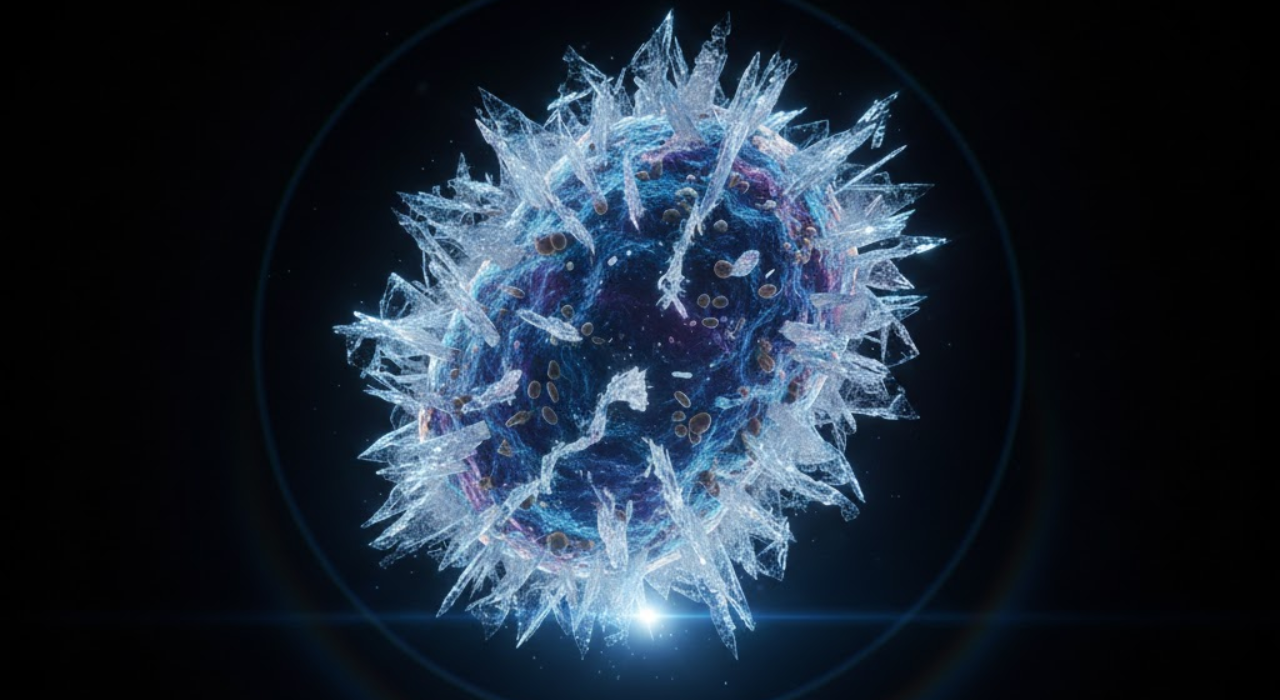
Hold on to your hats, folks, because the news coming out of Romania is both fascinating and a little unsettling. A team of scientists has managed to resurrect a bacterium – *Psychrobacter SC65A.3* to be exact – from the depths of the Scărișoara Ice Cave. This isn't your average bug; it's roughly 5,000 years old! And here's the kicker: it's resistant to ten different modern antibiotics.
5,000-Year-Old Superbug THREAT! Ice Melt Could Tri...
Now, I know what you're thinking: "Great, just what we need." And yes, the implications are a bit worrying. The study, published just last week, highlights a crucial point. Antibiotic resistance isn't some modern invention spurred solely by overuse in hospitals and agriculture. It's something that's been lurking in the shadows, or rather, frozen in ice, for millennia. This Ancient bacterium is a stark reminder that resistance genes are naturally occurring and far predate our modern antibiotic era.
The real concern lies in the potential for these genes to escape into contemporary bacterial populations. As climate change continues to warm the planet and melt Ancient ice, we could see a release of these long-dormant microbes and their resistance genes. Imagine those genes finding their way into already problematic bacteria – it's a recipe for a superbug soup that could make treating infections even more difficult. Think of it like opening Pandora’s Box, only instead of woes, we get drug-resistant bacteria.
But before we descend into full-blown panic mode, there's a silver lining, a tiny glimmer of hope frozen alongside this ancient bug. These cold-adapted microbes are also potential treasure troves of biotechnological innovation. Scientists believe they could hold the key to developing novel antibiotics, enzymes, and other tools we haven't even imagined yet. It's a classic double-edged sword. The very thing that scares us could also provide solutions to future problems.
Think about it: these bacteria have evolved over millennia in extremely harsh conditions. That means they possess unique adaptations and biochemical pathways that could be incredibly valuable in a variety of applications. It’s like finding an ancient, perfectly preserved toolkit. We might not know exactly what all the tools do, but they’re undeniably fascinating and potentially incredibly useful.
So, what’s the takeaway? Well, the discovery of *Psychrobacter SC65A.3* underscores the urgent need for a deeper understanding of ancient microbes and their potential impact on modern ecosystems. It highlights the complex relationship between climate change, antibiotic resistance, and the ongoing search for new medical solutions. It's a wake-up call, reminding us that the past can hold both threats and opportunities, often simultaneously. And it's a story we'll definitely be keeping an eye on here at the TOI Science Desk.
Comments
Please sign in with Google to post a comment
No comments yet. Be the first to comment!