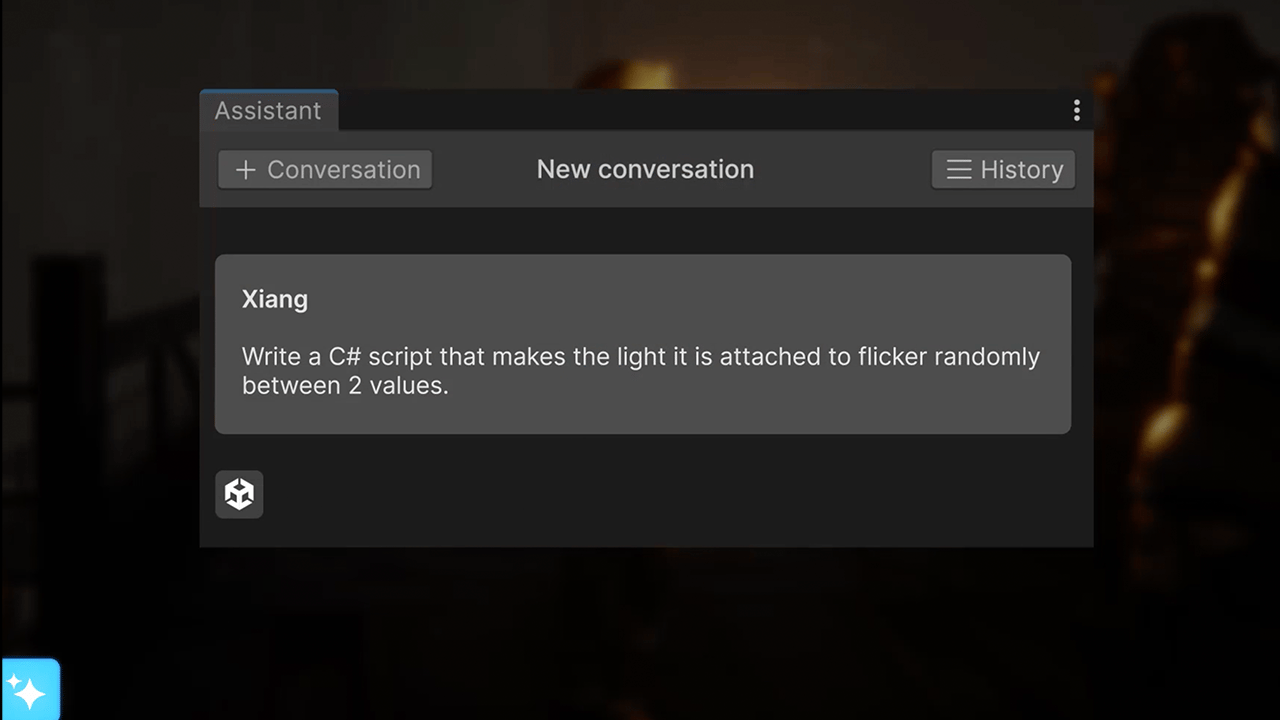
Unity Technologies is betting big on the future of AI in game development, and their CEO, Matt Bromberg, isn't shy about shouting it from the rooftops. According to Bromberg, we're rapidly approaching a point where AI can practically conjure entire "casual games" into existence from simple prompts. Now, that's a pretty bold claim, even in the hype-fueled world of AI.
AI Game Changer! Unity's Tech Creates Games From T...
Bromberg laid out his vision during a recent earnings call and subsequent Q&A, teasing a beta version of a dramatically upgraded Unity engine set to debut at the Game Developers Conference (GDC) in March. The centerpiece? An AI assistant designed to streamline the development process for everyone from seasoned pros to absolute beginners. This is where it gets interesting.
The key, according to Bromberg, is leveraging Unity's deep understanding of project context and runtime – essentially, knowing the ins and outs of how games *actually* work within their engine. This, combined with "the best frontier models that exist," should, in theory, lead to far more effective and efficient results than simply throwing generic AI tools at the problem. It's a targeted approach, not just a broad application.
“Our goal is to remove as much friction from the creative process as possible," Bromberg explained. He sees Unity becoming the "universal bridge" between a fleeting creative spark and a fully realized, scalable digital experience. It's a grand vision, certainly. And while the idea of an AI sidekick handling the tedious tasks sounds appealing, the real question is: can it deliver?
The potential impact, if Bromberg's predictions hold true, is enormous. He even suggested that AI adoption could lead to "tens of millions of more people creating interactive entertainment." That's a staggering number, and it hints at a future where game development is far more accessible than it is today. Imagine the explosion of creativity if the technical barriers to entry are significantly lowered.
Of course, there are plenty of skeptics out there. Can AI truly understand the nuances of game design? Will it lead to homogenization and a lack of originality? These are valid concerns. I think the real test will be how well Unity can balance the power of AI with the creative vision of the developers themselves. If it can strike that balance, then maybe, just maybe, we're on the cusp of a genuine revolution in game development. We'll be watching closely in March at GDC.
Comments
Please sign in with Google to post a comment
No comments yet. Be the first to comment!