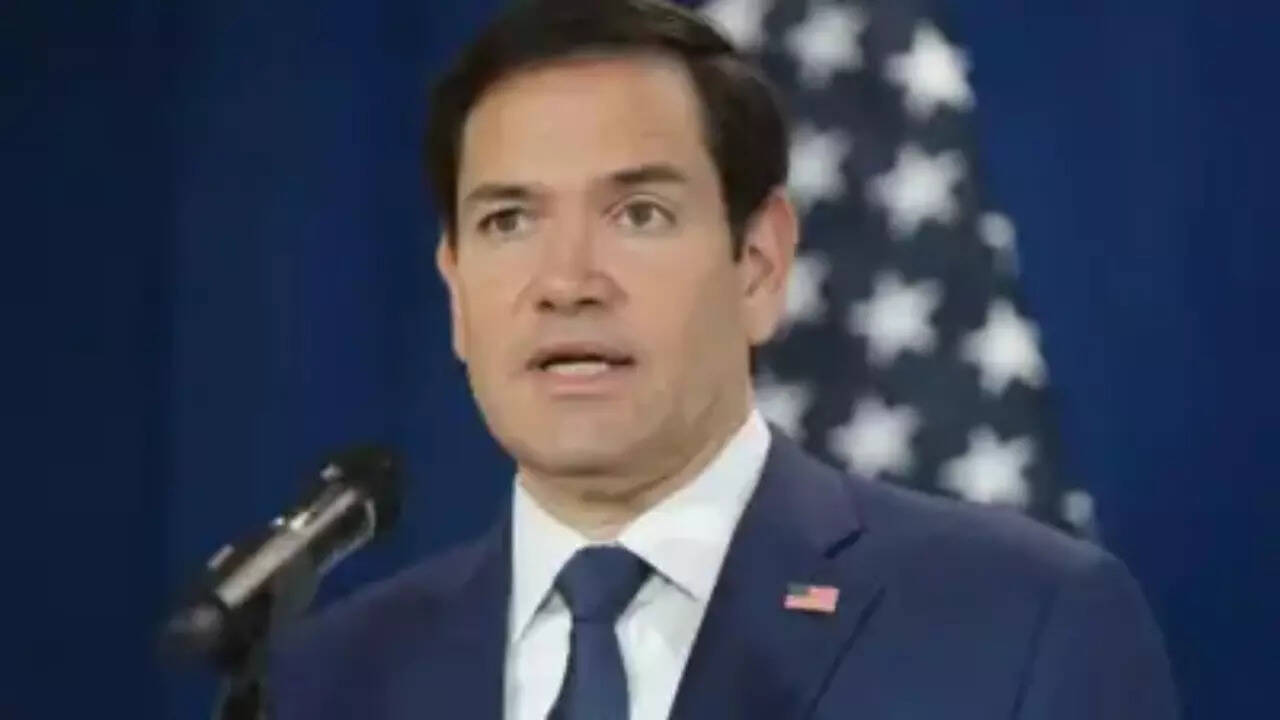
Marco Rubio's recent statements in Budapest have thrown a bit of a wet blanket on the already lukewarm prospect of a renewed nuclear agreement with Iran. The US Secretary of State didn't mince words, essentially saying a deal with Tehran remains a monumental headache, primarily because, in his view, radical Shia theology significantly impacts Iranian policy decisions.
Rubio's Iran Nuke Deal Warning: What Happens Next ...
Speaking alongside Hungarian Prime Minister Viktor Orban, Rubio doubled down on this point. He wasn't just saying negotiations are tough – we all know that. He specifically pointed to the influence of Shia clerics on the country's governance as a key obstacle. "Doing a deal with Iran is not easy," he stated, making it clear that understanding this theological dimension is crucial for anyone hoping to reach a successful agreement. It's a perspective that highlights the complex layers involved in international diplomacy, going beyond mere political maneuvering.
Despite these acknowledged hurdles, Rubio was careful to stress that the United States isn’t throwing in the towel. He affirmed that diplomatic efforts would continue, even against this backdrop of heightened tensions surrounding Iran's nuclear program and its broader activities in the region. You get the sense that this is a long game, a delicate dance between pressure and dialogue.
Shifting gears a bit, Rubio also addressed the ever-present issue of global economic security. He warned against becoming overly reliant on any single nation for critical goods, a point that's become particularly relevant in recent years. He emphasized that diversifying supply chains isn’t some act of aggression, but rather a matter of sound economic policy. It's about ensuring resilience and avoiding vulnerabilities.
"It’s not good for anybody to rely on 1 country or 1 economy for 90% of anything, especially things like critical supply chains," Rubio explained. It's a pretty straightforward argument, and one that resonates with many who have seen the consequences of over-dependence firsthand. I've heard similar sentiments echoed in various economic forums; it seems to be a growing consensus.
Interestingly, Rubio was quick to clarify that these diversification efforts aren't necessarily an "anti-China thing." He acknowledged the delicate balance, stating that over-dependence on a single source, particularly one that has shown a "willingness in the past to use it as leverage," is simply unwise. That's a rather diplomatic way of putting it, but the underlying message is clear.
However, despite these concerns about over-dependence, Rubio stressed the importance of continued engagement between Washington and Beijing. Severing ties completely, he argued, would be "crazy" given China's massive population, economic clout, and nuclear arsenal. It's a recognition that even with tensions and disagreements, maintaining a line of communication is vital in today's interconnected world. Ultimately, it's a pragmatic approach to a complex and evolving global landscape.
Comments
Please sign in with Google to post a comment
No comments yet. Be the first to comment!